Looking for the prettiest Cotswold villages to visit? In a nutshell: Castle Combe is the prettiest village in the Cotswolds, and Bibury has the single most beautiful street. If you only have time for two, those are the two. But the Cotswolds cover nearly 800 square miles of rolling countryside and honey-colored towns and villages, and the fun is in stringing several together.
I got to explore the Cotswolds one college summer when I was studying in Oxford and then returned more recently to show my husband. We did a three day trip driving through the Cotswolds in May with our two-year-old in tow, and this guide covers thirteen of the region’s prettiest places. I rank the nine places we experienced first, then include four more noteworthy villages to consider for a longer trip. (I’d rather be clear about what we personally experienced than present secondhand research as firsthand advice!)
Prettiest Cotswold Villages: Key Takeaways
- Prettiest overall: Castle Combe is my number-one pick, while Bibury’s Arlington Row is the most beautiful single street.
- Best for first-time visitors: Base yourself in Stow-on-the-Wold and combine it with Bourton-on-the-Water, Chipping Campden, and one of the smaller villages nearby.
- Best with kids: Bourton-on-the-Water has the most attractions, food options, and room to take a break beside the river.
- Best quiet stop: Snowshill has the sleepy-village atmosphere people picture when planning a Cotswolds trip.
- How much time you need: Plan on three villages in one day, or four only if two are very small and you don’t mind moving quickly.
What You’ll Find in Each Cotswold Village
Here’s a summary of the 13 prettiest Cotswold villages and what each place is best for:
| Village | Type | Time to give it | Best for |
|---|---|---|---|
| Castle Combe | Village | 1–2 hours | The postcard |
| Bibury | Village | 1–2 hours | Arlington Row, lunch at the Swan |
| Bourton-on-the-Water | Large village | 2–3 hours | Kids, footbridges, an easy afternoon |
| Stow-on-the-Wold | Market town | Half a day, or a base | Antiques, restaurants, lodging |
| Chipping Campden | Market town | 1–2 hours | The most elegant High Street |
| Broadway | Village | 2–3 hours; half a day with the tower | Shops, restaurants, and Broadway Tower |
| Lacock | Village (Wiltshire) | 1–2 hours | Film locations and photography history |
| Snowshill | Village | 45 minutes | Views and quiet |
| Burford | Market town | 45 minutes | A first stop from Oxford |
| Lower Slaughter | Village | 1 hour | River views and the old mill |
| Upper Slaughter | Village | 30–45 minutes | A quieter countryside walk |
| Stanton | Village | 45 minutes | Unspoiled cottages and the Cotswold Way |
| Painswick | Town | 1 hour; half a day with the garden | Yew trees and Painswick Rococo Garden |
Map of the Cotswold Villages
The places in this guide (marked in blue on the map) fall into two broad clusters:
- The northern group includes Burford, Bourton-on-the-Water, Stow-on-the-Wold, the Slaughters, Snowshill, Broadway, Stanton, and Chipping Campden.
- The southern route links Painswick and Bibury with Castle Combe and Lacock on the way toward Bath.
I’ve also added additional attractions in purple and red on the map.
Actual drive times vary with traffic and narrow country roads, so use the map for routing rather than assuming every nearby-looking stop will be quick. You can cover either cluster in a full day. However, I’d allow more time if you want lunch, afternoon tea, shopping, or an attraction. Doing both is much more enjoyable with a car and at least two nights. We based ourselves in Stow for the north and ended in Bath after the south.
What to Know Before Visiting the Cotswold Villages
Visit the most well-known villages early or late. Bibury, Castle Combe, and Bourton-on-the-Water can feel completely different before the day-trip crowds arrive. If photography matters to you, I would prioritize your most popular spot before 10 am. Then, save a market town with cafés and small shops for midday.
Do not expect every village to have visitor facilities. The small size of villages like Snowshill and Castle Combe is part of their appeal. However, it also means limited restrooms, parking, and food. Stow, Chipping Campden, Broadway, Burford, and Bourton are better places to plan a café stop, lunch, or one of the Cotswolds’ traditional afternoon teas.
Parking may be outside the historic center. Follow posted signs and use designated lots rather than squeezing onto a narrow main road or blocking a gate or driveway. These cottages are people’s homes. Stay on public paths, don’t peer through windows or enter private gardens, and be especially considerate in the villages dealing with heavy tourism.
Leave extra time between stops. The mileage looks short, but narrow lanes, tractors, pedestrians, and searching for parking all slow you down. Download an offline map before you go, since mobile service can be patchy in the valleys.
1. Castle Combe
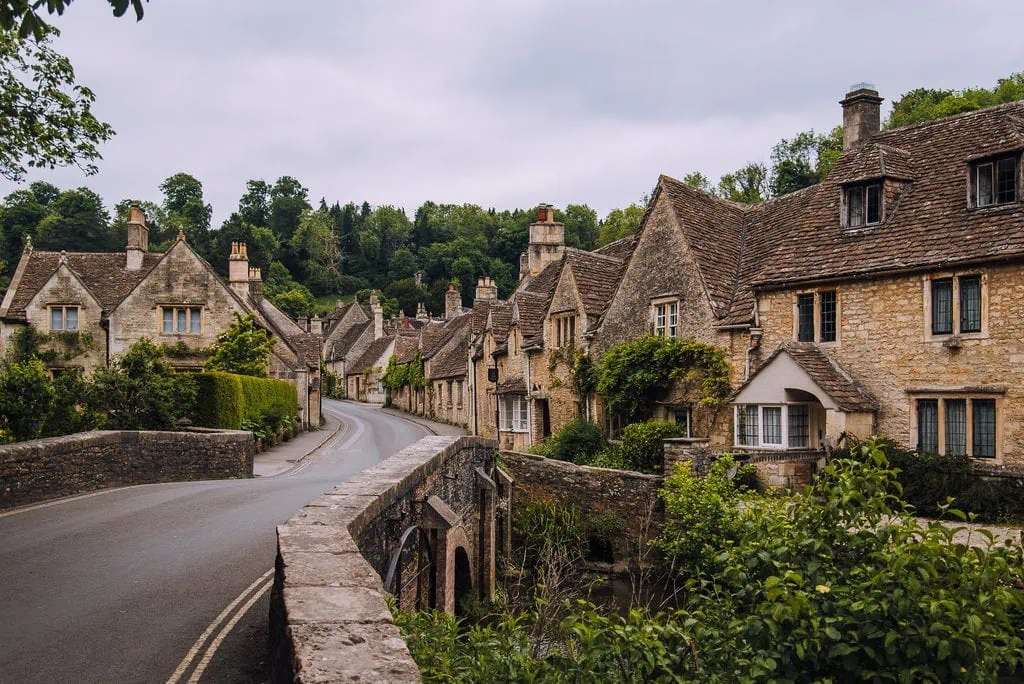
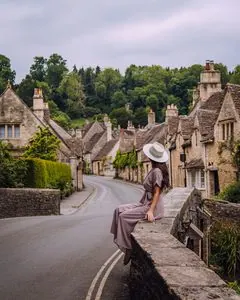
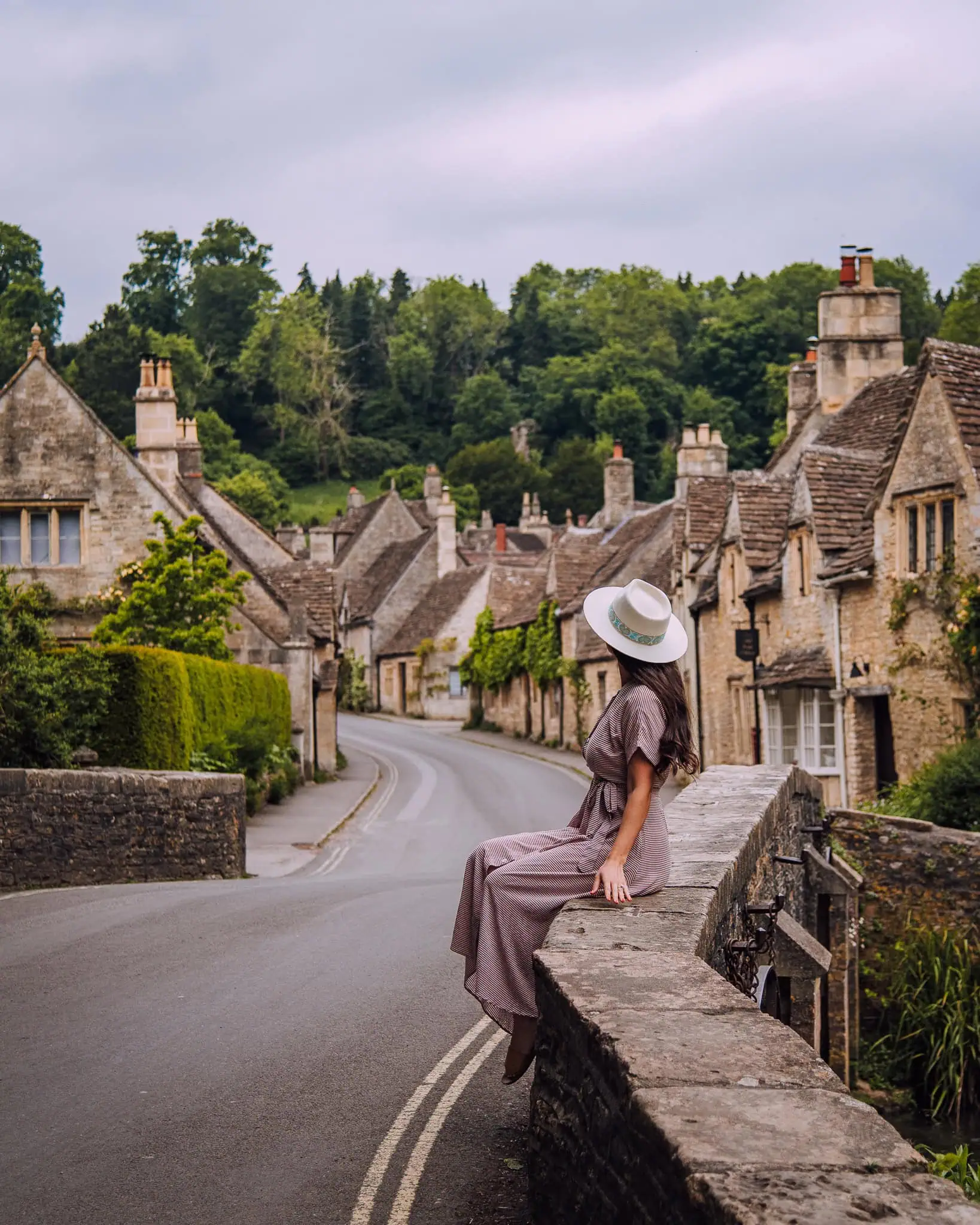
Castle Combe is the village everyone pictures when they imagine the English countryside, and it lives up to it. Its main street of stone cottages runs downhill from a medieval market cross to a small bridge over the Bybrook. The historic center is tiny, and there isn’t a checklist of attractions to work through. You come to walk down the hill, admire the houses, cross the bridge, and take in the entire scene—and it is completely worth the detour.
The reason it looks the way it does is that very little modern development interrupts the historic center. It has appeared in productions including War Horse, Stardust, and the original Doctor Dolittle. Inside St Andrew’s Church is a rare medieval faceless clock, often described as one of the oldest working clocks in England. Just beyond the bridge, the village opens into the grounds of The Manor House, a luxury country-house hotel on a large estate.
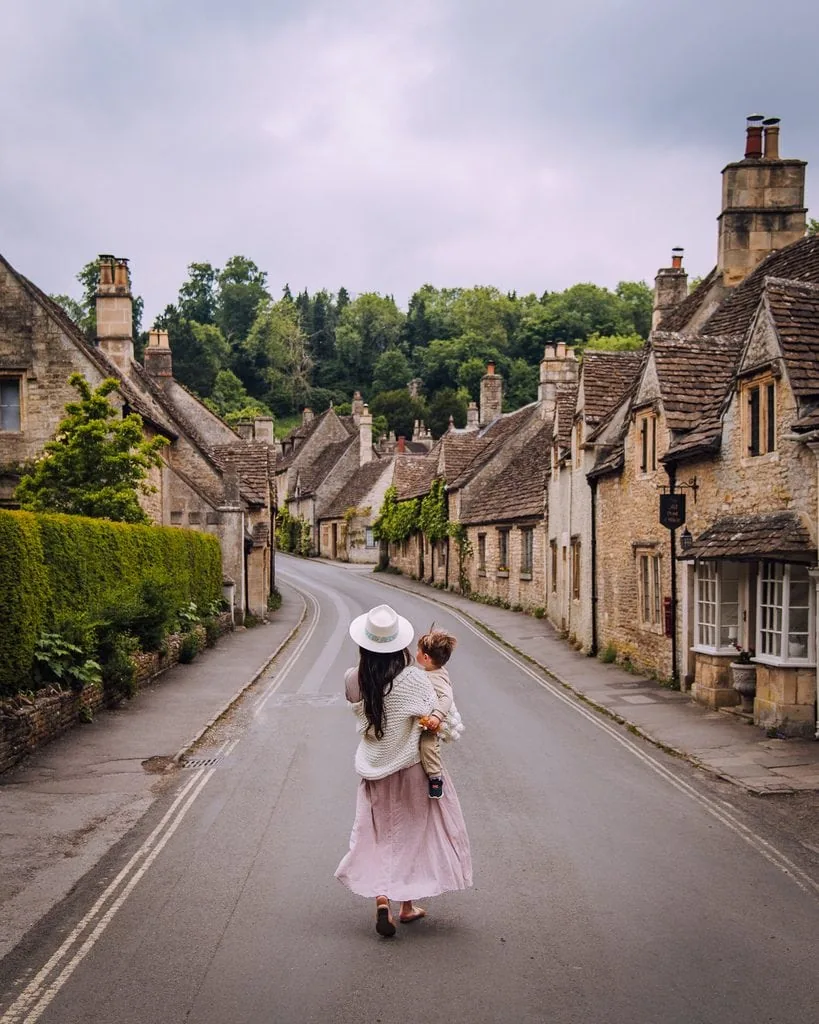
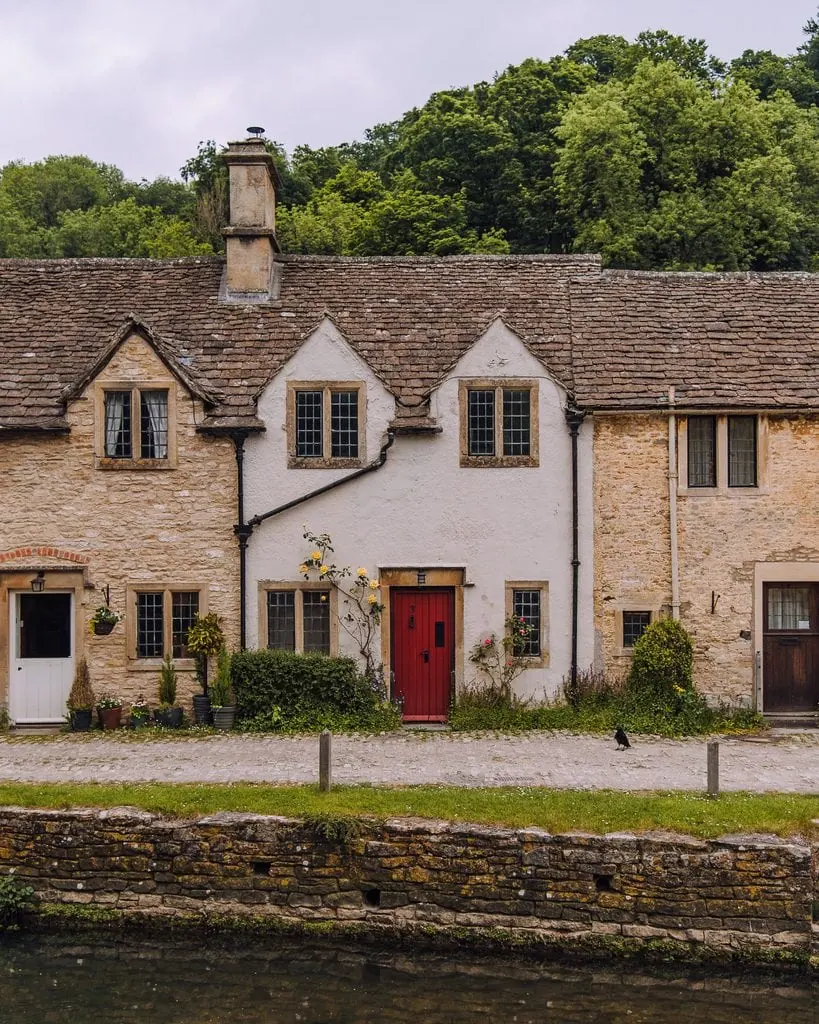
Best photo spot: Stand on the bridge at the bottom and shoot back up the street. Early morning or late afternoon gives you softer light and fewer tourists. Visitors should use the signed Dunns Lane car park at the top of the hill. From there, you’ll walk roughly ten minutes down a fairly steep slope. Expect both pedestrians and the occasional car in your photos.
How long to spend: An hour is plenty. Two if you stop at the pub.
Worth knowing: It’s tiny, and by late morning it fills up. Parking in the lower village is extremely limited and needed by residents, so don’t count on finding a closer space. The walk back to the visitor lot is uphill, which is worth factoring in if you’re traveling with a stroller or anyone with limited mobility.
Pair it with: Lacock, roughly twenty to thirty minutes away depending on traffic, followed by Bath.
2. Bibury
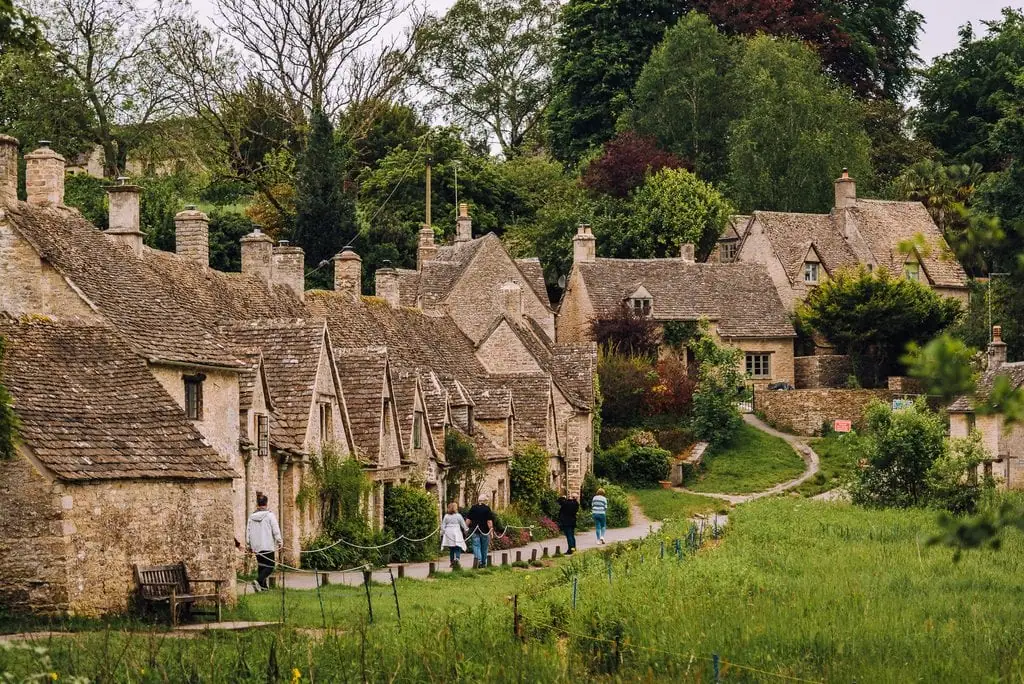
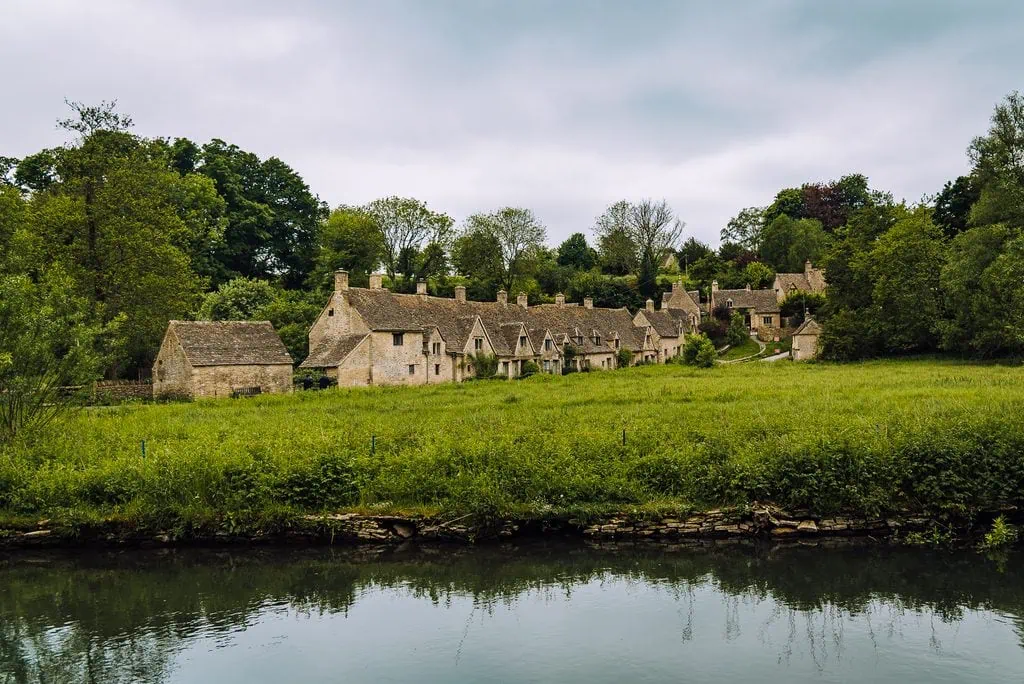
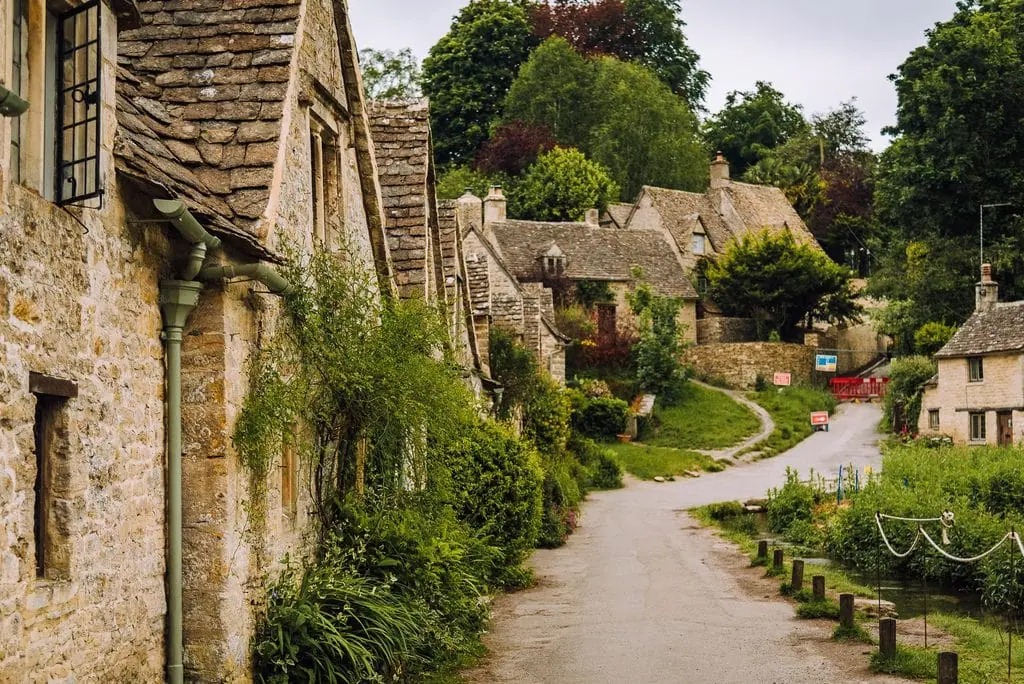
Bibury has the most photographed street in the Cotswolds, and Arlington Row is as good as the photos. The buildings were constructed around 1380 as a monastic wool store and converted into weavers’ cottages in the seventeenth century. They sit beside a stream with the water meadow of Rack Isle in front. William Morris famously called Bibury the most beautiful village in England. The National Trust now cares for Arlington Row, but people still live in the cottages. That’s worth remembering when you’re standing near someone’s kitchen window!
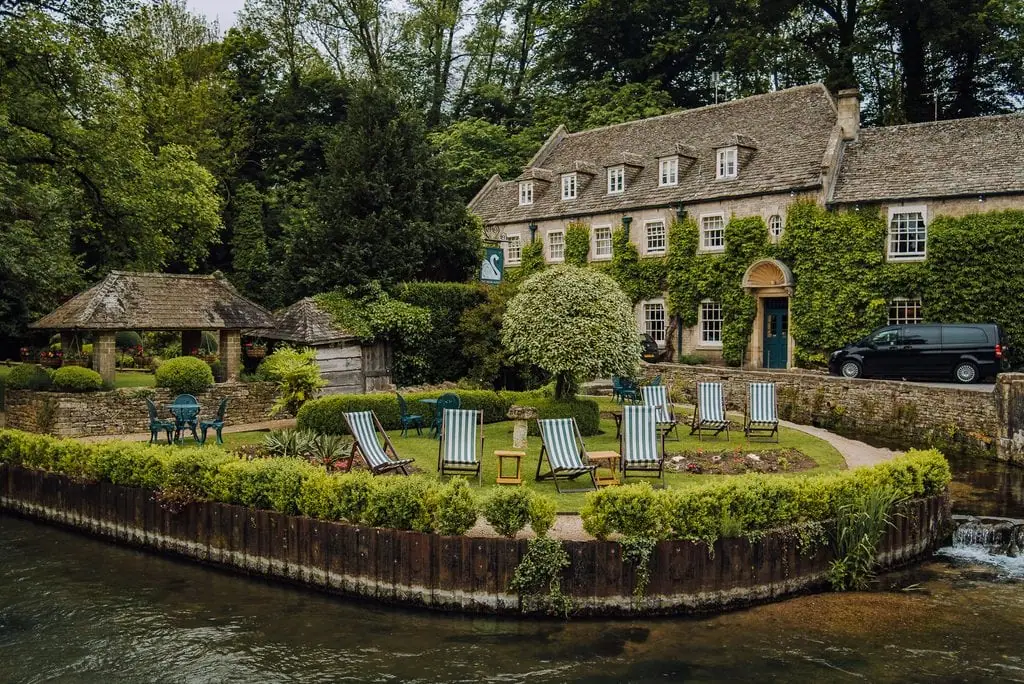
The rest of the village is small: the River Coln, a trout farm that’s been operating since 1902, and The Swan Hotel, an ivy-covered coaching inn right on the water. We’d originally planned to stay at the Swan but ended up having lunch there instead, and I’d recommend it for exactly that. Sitting by the river with a plate of food after walking Arlington Row is the right way to do Bibury.
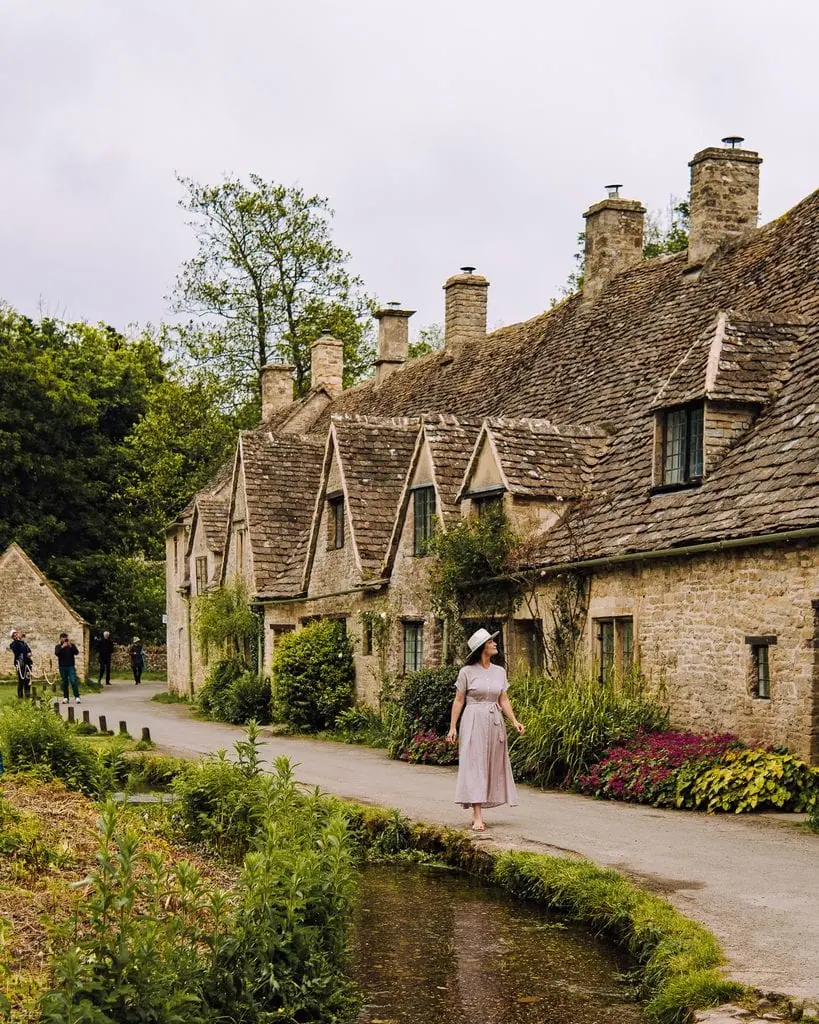
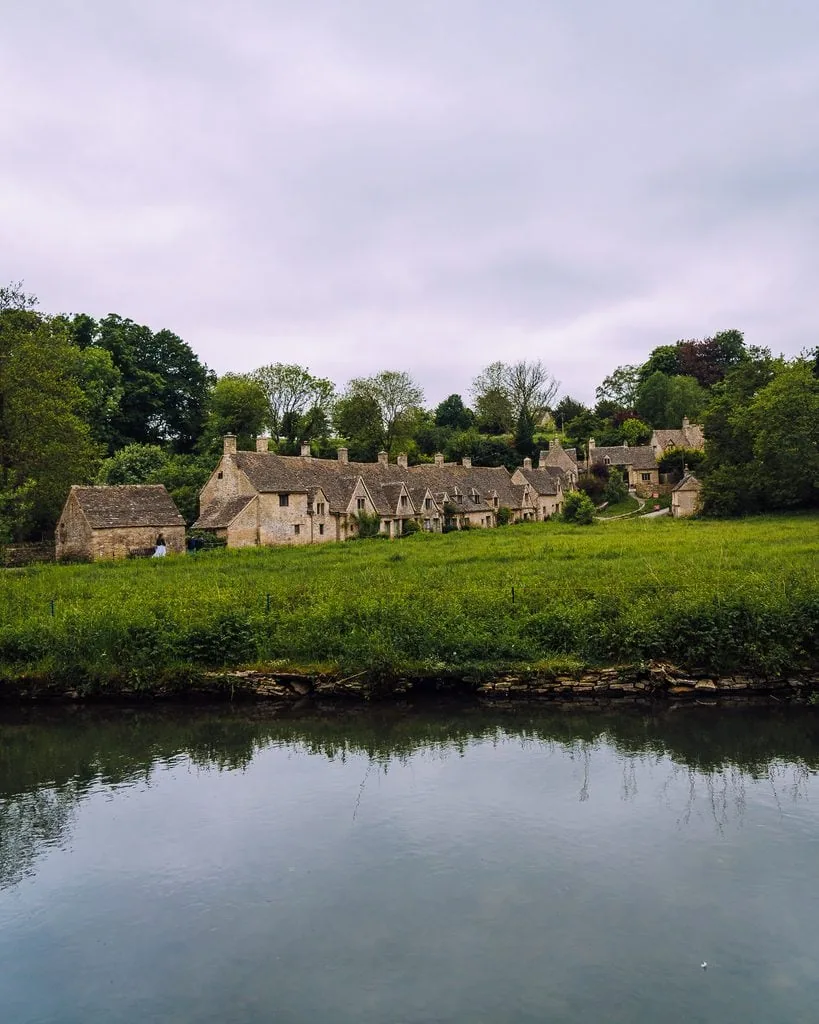
Best photo spot: Arlington Row from the footpath along the stream, with the cottages running away from you. Everyone takes this photo, but take it anyway. Then walk to the far end and shoot back toward the village for the version fewer people get!
How long to spend: An hour for the row and the village, two with lunch.
Worth knowing: Bibury’s popularity has created real friction between residents, cars, coaches, and tourists. Come before 10 am or later in the afternoon if you can, use designated parking, and never block the main road or bridge. The Arlington Row cottages are homes, not a museum, so stay on the public path and respect residents’ privacy.
Pair it with: Castle Combe, about forty-five minutes south.
3. Snowshill
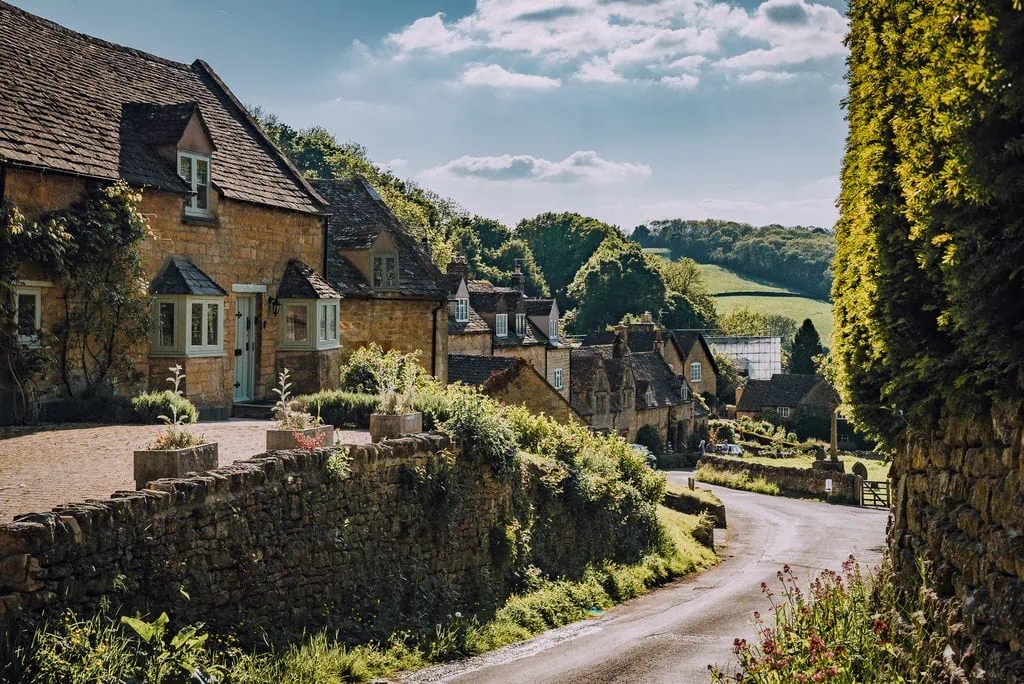
Snowshill is a quiet, absolutely charming Cotswold village. It’s a handful of cottages and a church on a hillside above the Vale of Evesham, with views across the valley and very little commercial activity. If Bourton is the Cotswolds at their busiest, Snowshill is the opposite! It’s one of those sleepy villages that feels wonderfully removed from everything. You’ll recognize it if you’ve seen Bridget Jones’s Diary; the village stood in for her parents’ home.
The two reasons to come are Snowshill Manor, an unconventional National Trust manor house filled with the collections of architect and craftsman Charles Paget Wade, and Cotswold Lavender on the hill above the village. The fields generally open from mid-June into early August, with the strongest color usually in late June and July, but flowering and opening dates change with the weather each year. (We were there in May, so the fields were green rather than purple).
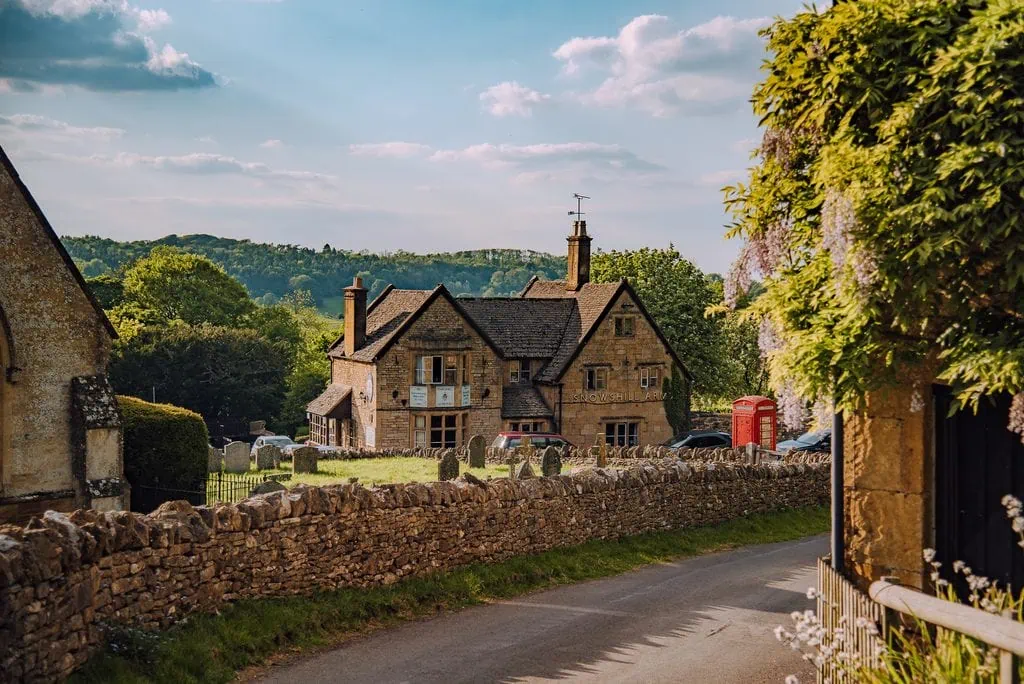
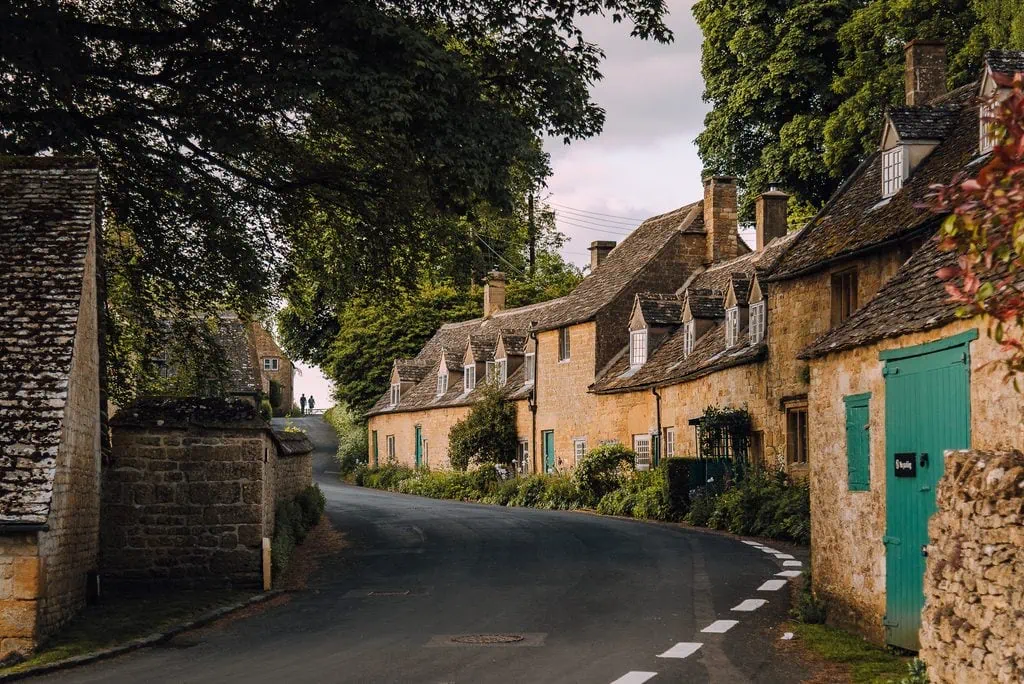
Best photo spot: The village from the road above, with the church tower and the valley behind. (And, if you come in July, the lavender rows with the hills behind them!)
How long to spend: Forty-five minutes for the village and the view. Add an hour or two if you’re going to the Manor.
Worth knowing: Snowshill Manor and Cotswold Lavender are separate attractions with their own admission, parking, seasons, and opening hours. Check both official sites before building your day around them!
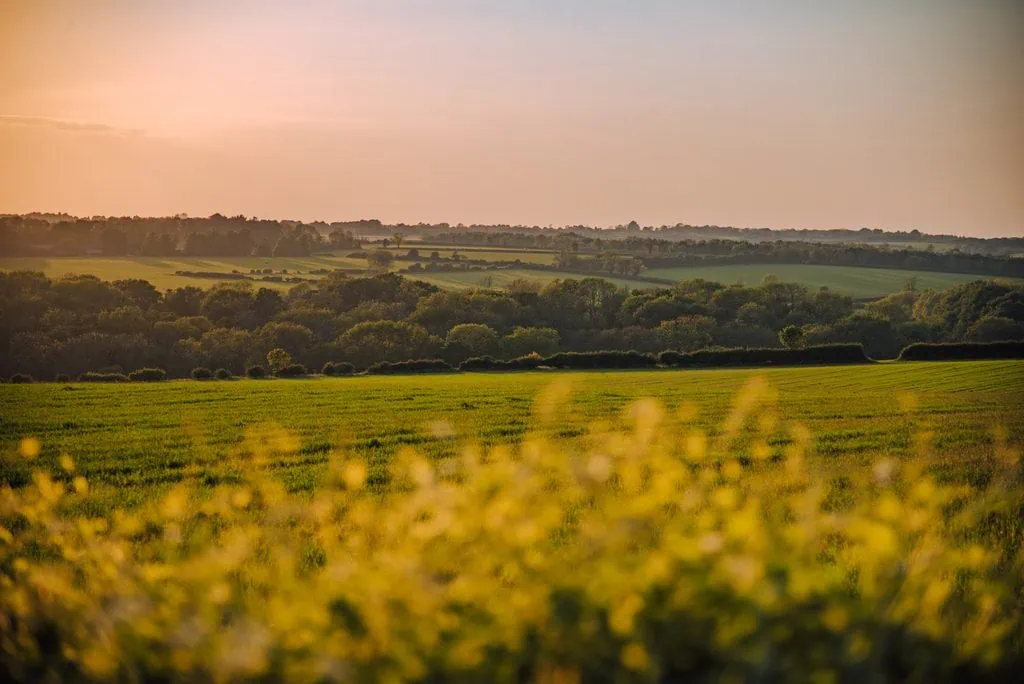
Pair it with: Broadway Tower, about ten minutes north, or Stow, around twenty minutes away. The road between Snowshill and Broadway passed fields that were solid yellow with rapeseed when we drove it in May. Enjoy the view from a legal, marked stopping place rather than pulling onto a narrow verge.
4. Burford
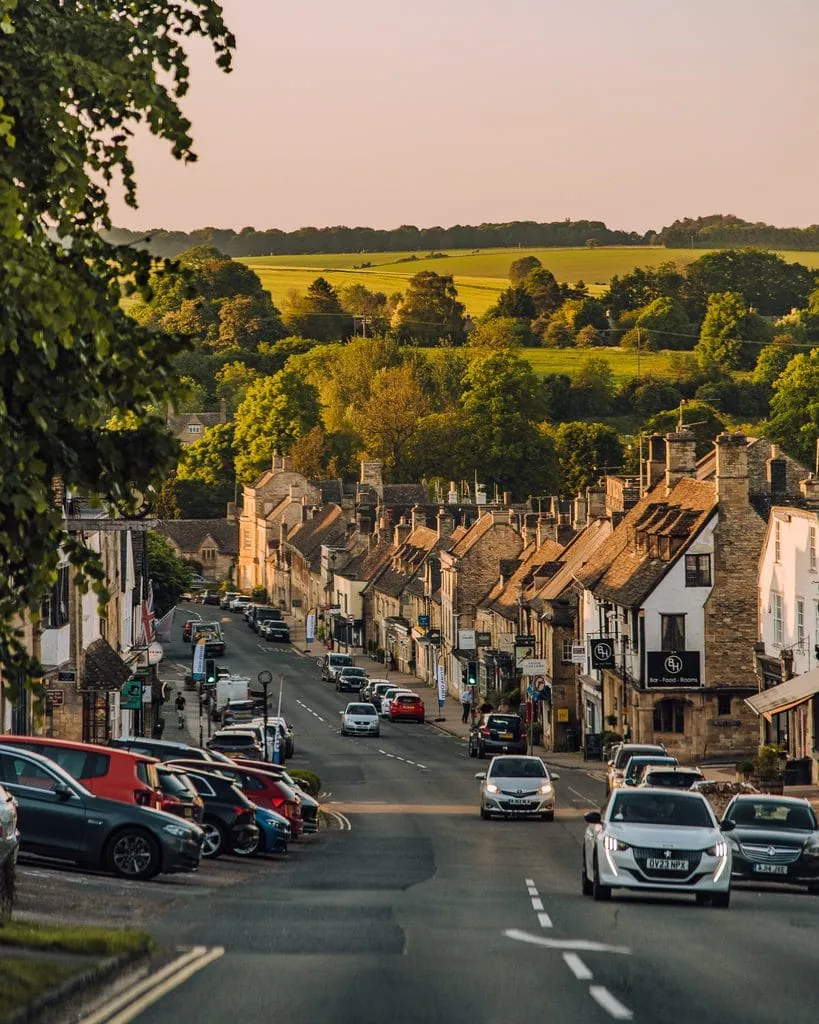
Burford is more of a beautiful main-street stop than a tiny village wander. It’s one of the first major Cotswold towns you reach from Oxford, which is why it gets called the gateway to the Cotswolds. Its wide, sloping High Street runs downhill toward a bridge over the River Windrush, lined with stone buildings, antique shops, cafés, and a very good bakery.
It was our first stop after Oxford and a good introduction: the color of the stone, the shape of the roofs, the scale of the place. While it’s not as classically picturesque as the villages further in, the view from the top of the hill is stunning at sunset! I made Harrison pull over so I could take a photo.
The church of St John the Baptist at the bottom of the hill is worth the walk, and the sixteenth-century Tolsey, a small market house on pillars, is the building to look for on the High Street.
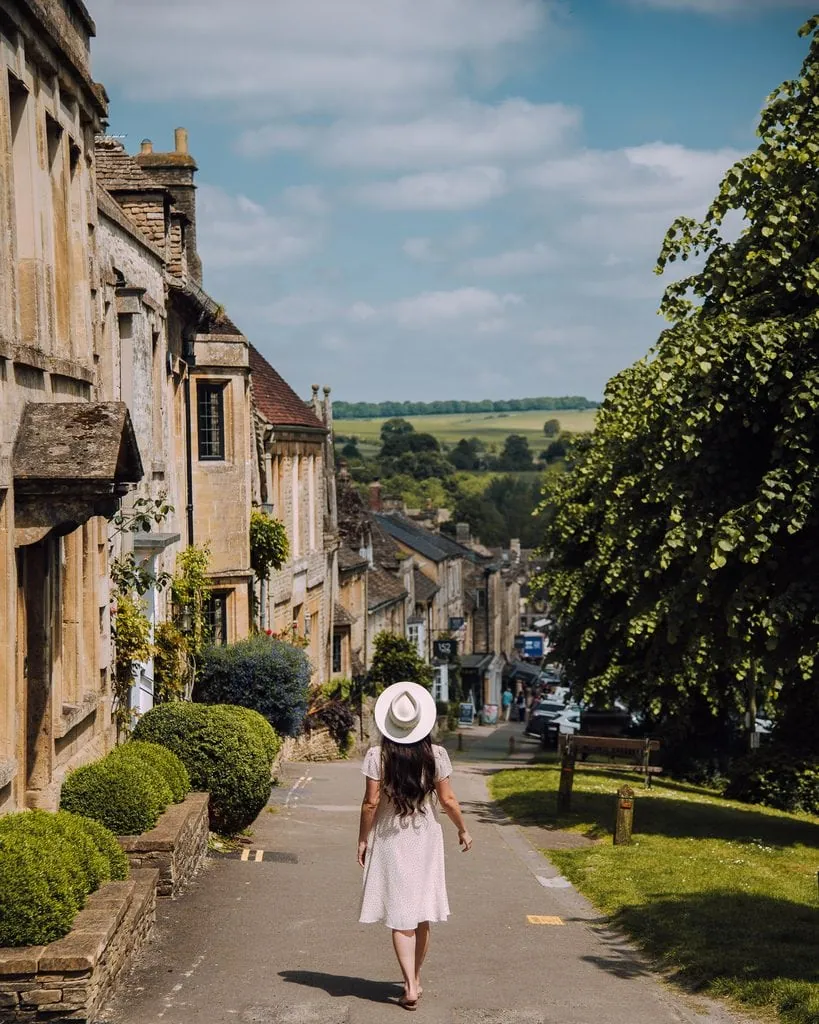
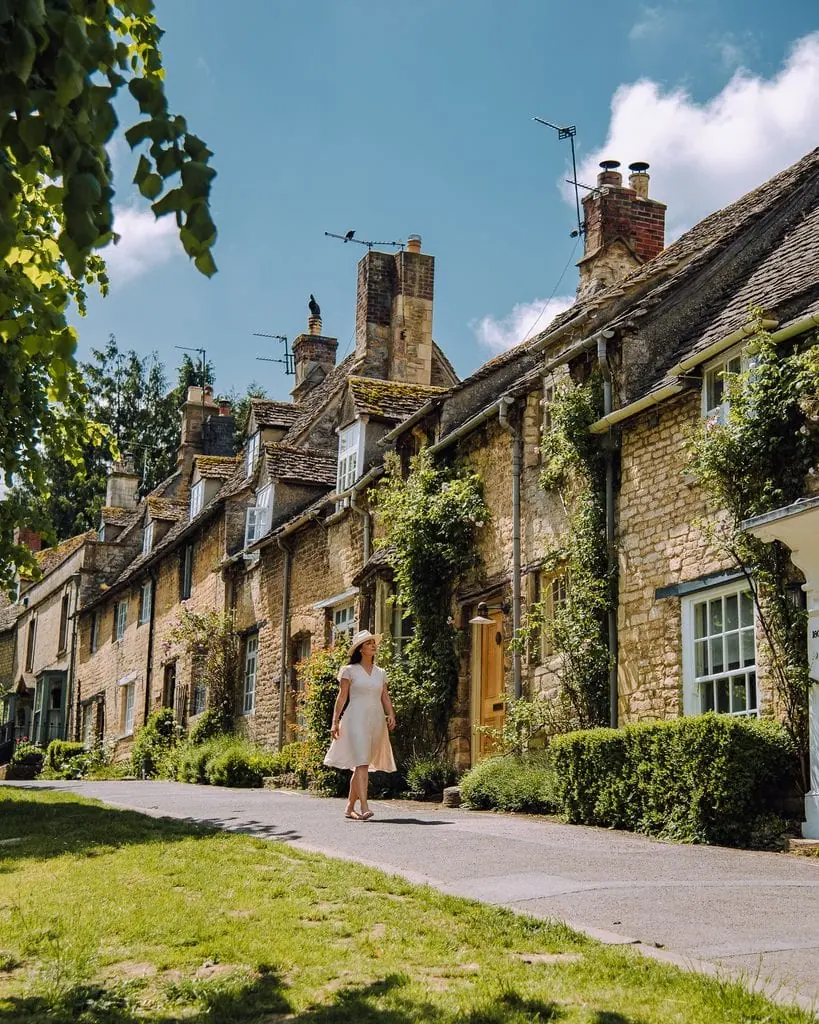
Best photo spot: Looking down the High Street from the top of the hill toward the bridge.
How long to spend: Forty-five minutes; it’s more of a coffee-and-a-stroll stop.
Worth knowing: Cotswold Wildlife Park is a couple of miles south, if you’re traveling with kids who’ve had enough of stone cottages.
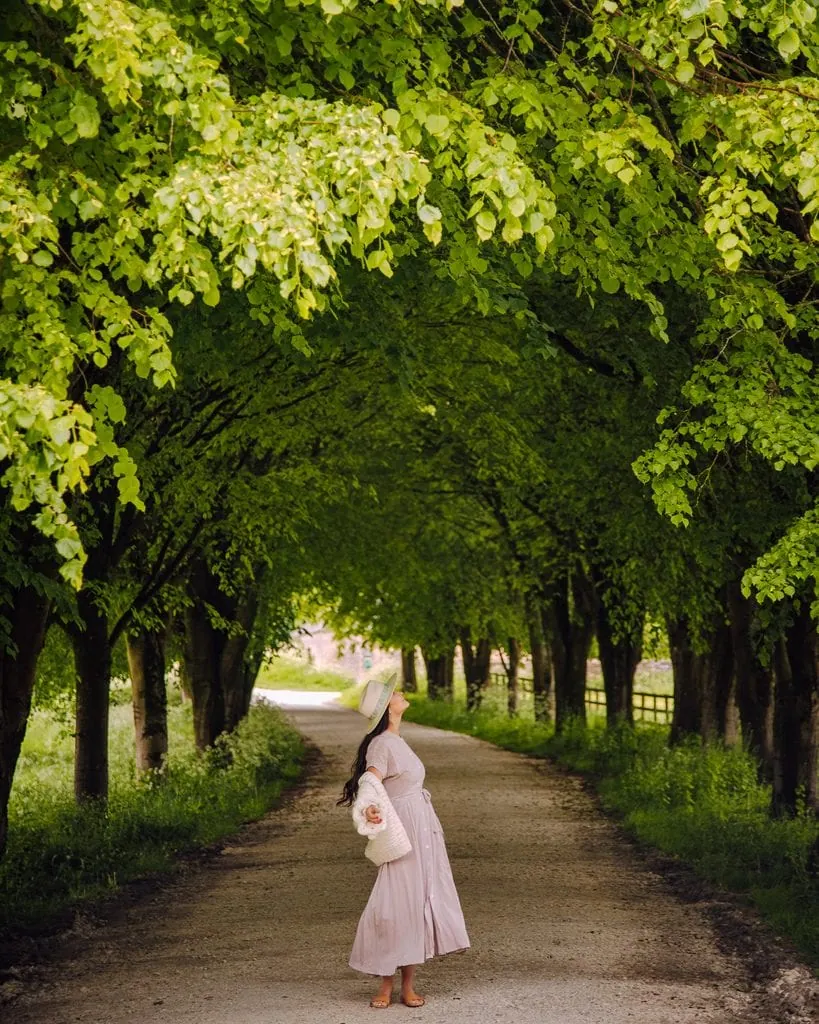
Pair it with: Oxford, thirty minutes east, and Bourton, twenty minutes west. If you want a hidden gem, the tree-lined avenue at Sherborne, ten minutes west off the A40, is a tunnel of green in May and there was nobody there but us!
5. Bourton-on-the-Water
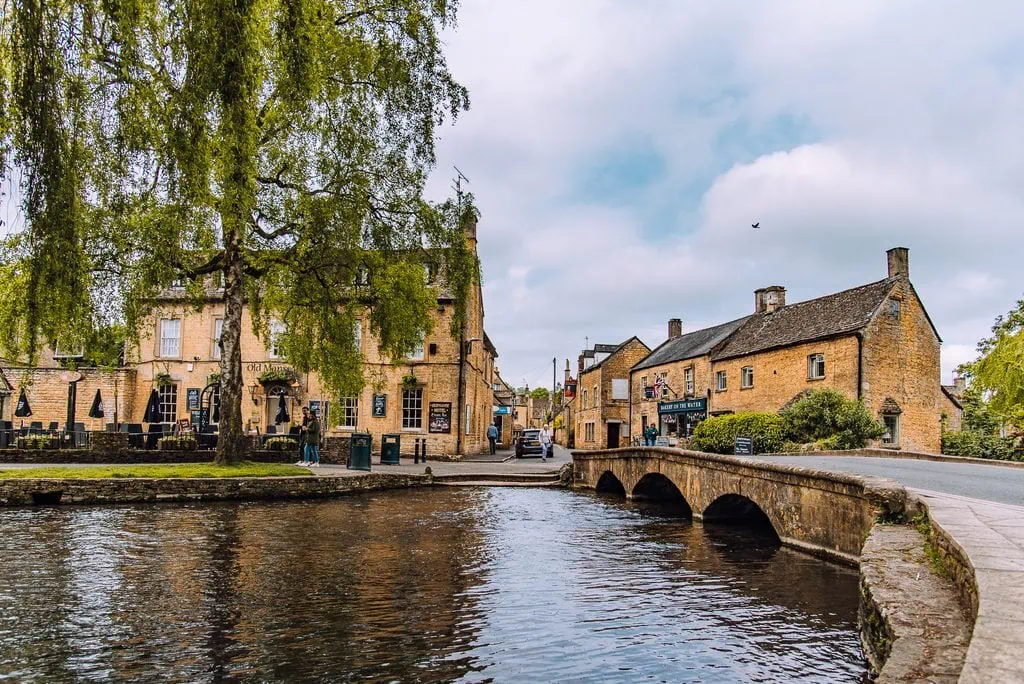
Bourton-on-the-Water is the easiest Cotswold village to love, especially with kids. The River Windrush runs through the village green beneath a series of low stone footbridges. That’s why it gets called the Venice of the Cotswolds, which oversells it, but the bridges really are the charm. Kids can cross them while you take a break on the grass with a coffee.
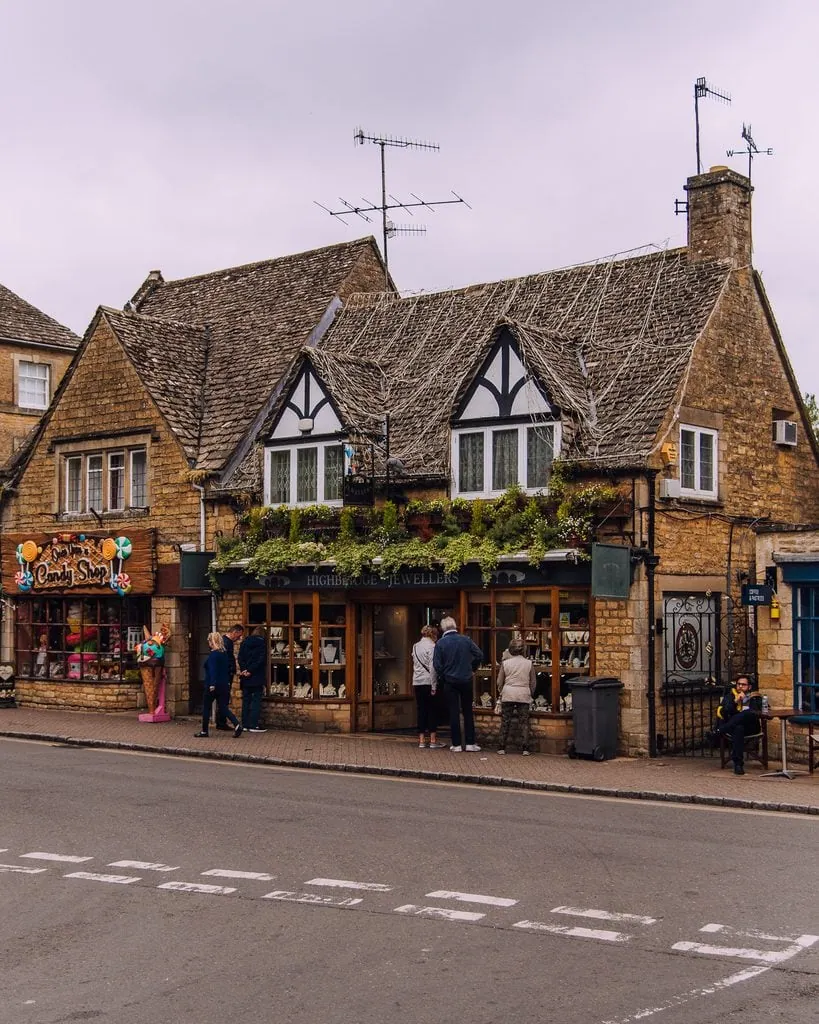
It’s also the village with the most to actually do. There’s a Model Village, which is a one-ninth scale replica of Bourton itself, so detailed that it includes a model of the model. There’s a motoring museum full of vintage cars and old advertising signs, and Birdland, a small bird park with penguins. None of these are must-sees, but together they turn a pretty stop into a real afternoon.
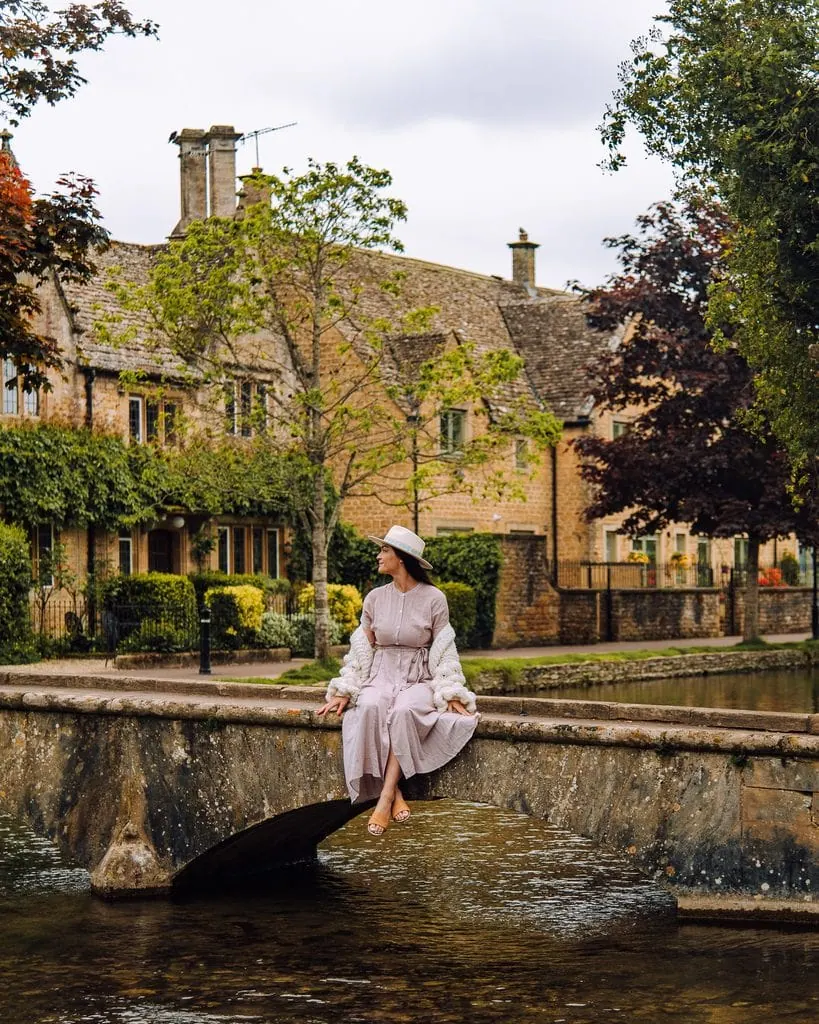
Best photo spot: Any of the footbridges from the bank, with the water and the row of stone buildings behind. The bridges nearest the village center are the classic angle.
How long to spend: Two to three hours. Longer if you do the Model Village or Birdland with kids.
Worth knowing: This is one of the most well-known villages in the Cotswolds, and you can definitely tell by midday! For many organized tours it functions as the main village stop, so arrive early and use one of the signed car parks rather than circling the center. It’s also the most commercial place on this list, with gift shops, cafés, and tea rooms lining the green. Some people dislike that; with a two-year-old, we loved the easy access to food and treats!
Pair it with: Stow-on-the-Wold, about ten minutes north. If you have extra time, Lower Slaughter is roughly a mile away on foot via the Wardens’ Way; unfortunately, we didn’t get to make that walk.
6. Stow-on-the-Wold
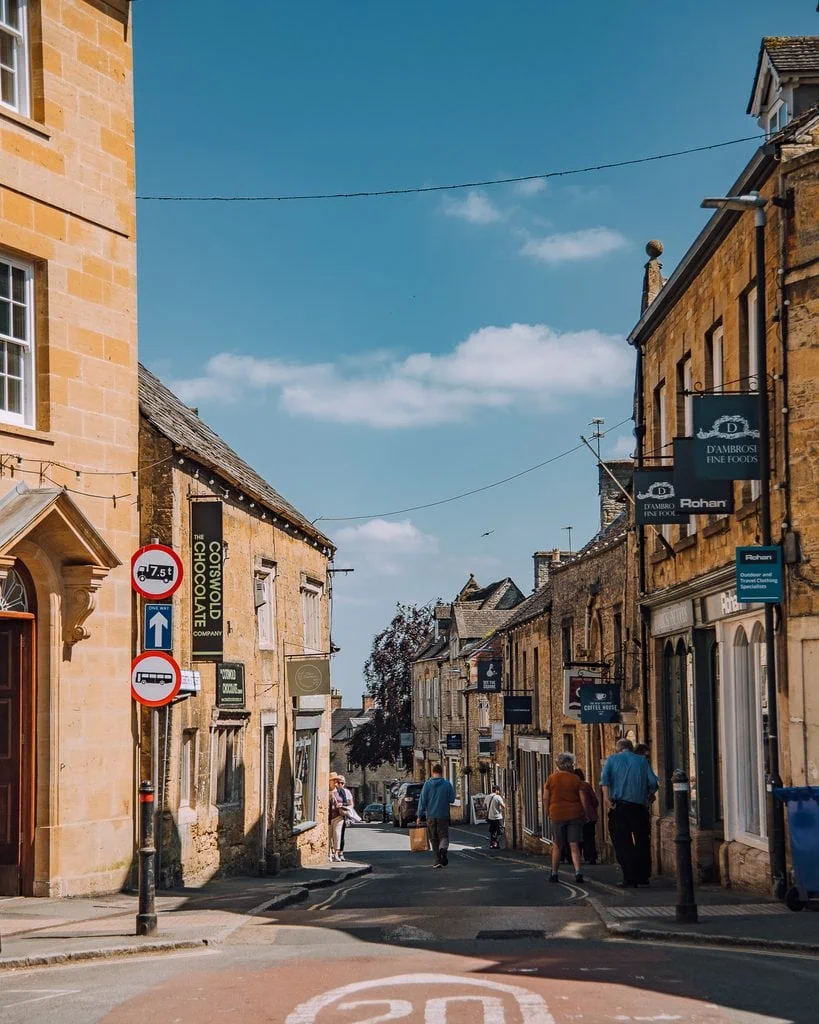
Stow-on-the-Wold is a charming Cotswold village that’s a great home base for an overnight stay. This hilltop market town grew at an important intersection on the Roman Fosse Way, and its large market square reflects centuries of trade and livestock fairs. It has what the smaller villages don’t: plenty of restaurants, antique stores and other small shops, proper pubs, and enough going on after six o’clock that you’re not eating a sandwich in a rental car.
We stayed two nights in a cottage just off the square, a small stone place decorated in a Scandinavian style, and used it as our base for the northern villages. Bourton, Burford, Snowshill, and Chipping Campden are all generally within about ten to thirty minutes by car, depending on the route and traffic.
The thing to see in Stow is the north door of St Edward’s Church, framed by two old yew trees that have grown around the entrance. You’ll often read that it inspired Tolkien’s Doors of Durin, but there is no firm evidence connecting this particular doorway to Tolkien. It still looks straight out of Middle-earth and is an easy two-minute walk from the square.
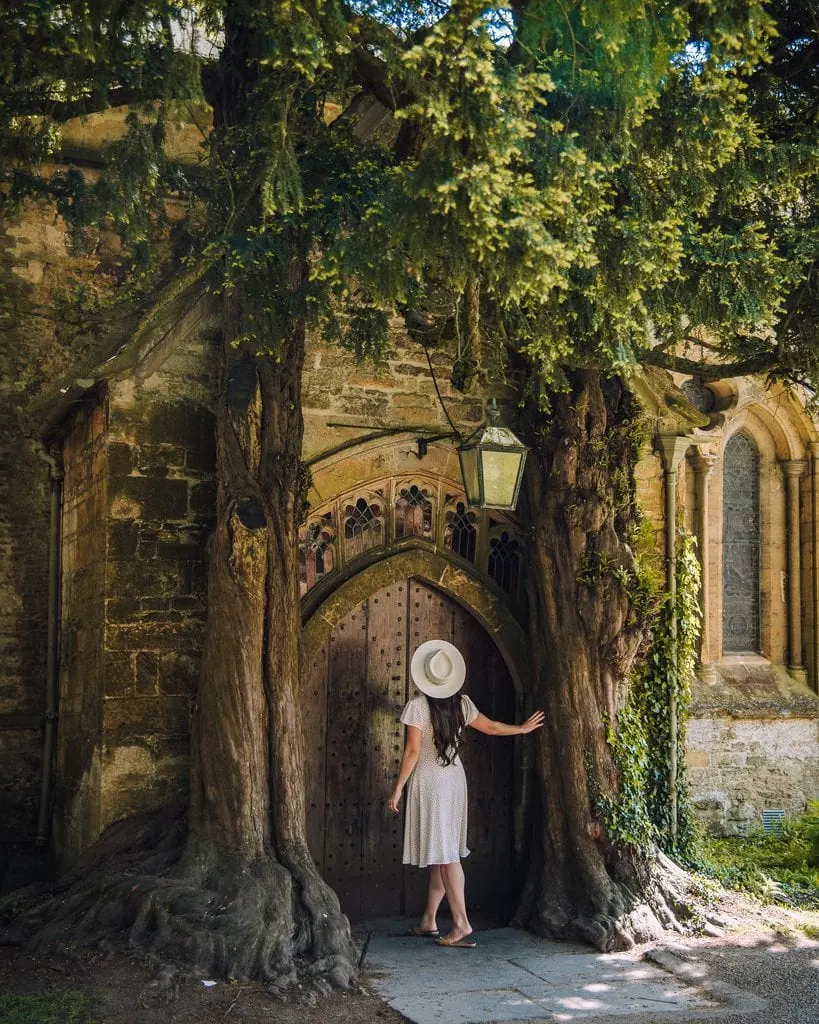
Best photo spot: The yew door at St Edward’s. Late afternoon light comes through the trees.
How long to spend: Half a day to wander the square and the antique shops, or two nights as a base.
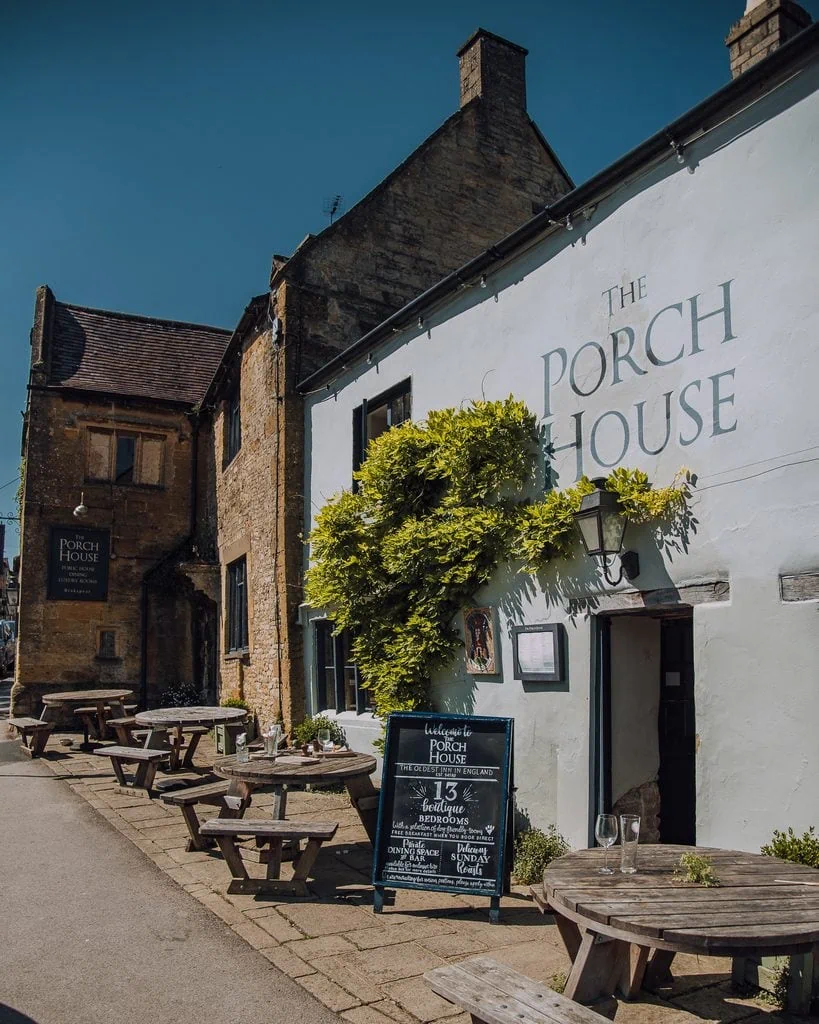
Worth knowing: The Porch House promotes itself as England’s oldest inn, although claims like that are difficult to prove. Stow is a town, not a village, and it feels like one—which is exactly what I wanted at the end of a day spent hopping between tiny villages. Its central location and wider range of places to eat also make it much more practical after the day-trippers leave.
Pair it with: Everything in the north; Bourton is ten minutes, Snowshill twenty, and Burford is twenty-five.
7. Chipping Campden
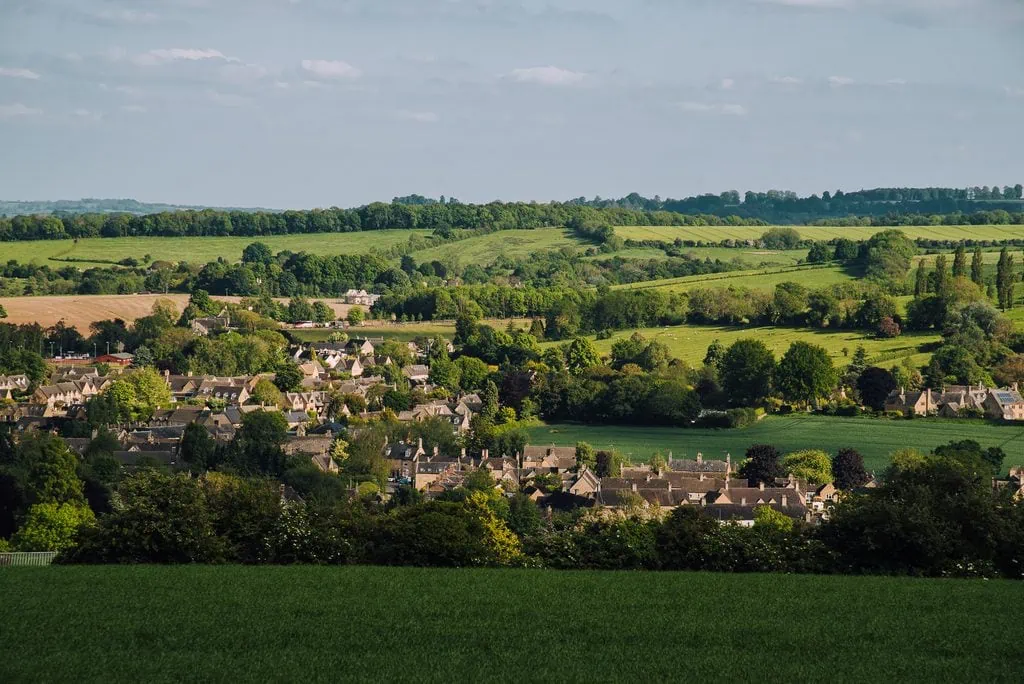
Chipping Campden has the most elegant High Street in the Cotswolds, and the best view of any town on this list. Where Burford’s street runs straight downhill and Stow’s opens into a square, Chipping Campden’s curves gently for half a mile, lined end to end with golden stone houses built when this was one of the richest wool towns in England. In the middle sits the Market Hall, an open-sided stone building from 1627 put up so farmers could sell butter and cheese out of the rain. It’s still standing there, doing nothing, looking perfect. Walk through its arches and shoot the street framed by the stone.
The town has a second story most visitors miss. In 1902 a designer named C.R. Ashbee moved his Guild of Handicraft here from London, and Chipping Campden became a center of the Arts and Crafts movement. There’s still a silversmith working in the old guild building on Sheep Street. St James’ Church at the north end is one of the great Cotswold wool churches, and the Cotswold Way, the hundred-mile walking trail to Bath, starts right at the Market Hall.
Best photo spot: In town, the Market Hall from across the High Street is the classic shot. For the view we got above, drive five minutes west to Dover’s Hill and shoot back over Chipping Campden from above: the church tower, the curve of the High Street, and fields to the horizon. It’s National Trust land with a small free car park off Kingcombe Lane.
How long to spend: An hour to walk the High Street and the church. Half a day if you add Hidcote, ten minutes east.
Worth knowing: Chipping Campden felt calmer than Bourton or Stow during our visit, and its gently curving High Street photographed beautifully. There is limited parking along the High Street plus public parking off Back Ends; always check the posted restrictions rather than assuming a roadside space is unrestricted.
Pair it with: Hidcote Manor Garden, ten minutes east, and Broadway Tower, fifteen minutes west.
8. Broadway
Broadway is a polished northern Cotswolds stop. It has a broad, grass-edged High Street lined by honey-colored buildings, independent shops, galleries, cafés, restaurants, and historic inns. It has more going on than the tiny villages but still looks unmistakably Cotswold, which makes it a practical place to pause for a meal or a few hours of browsing.
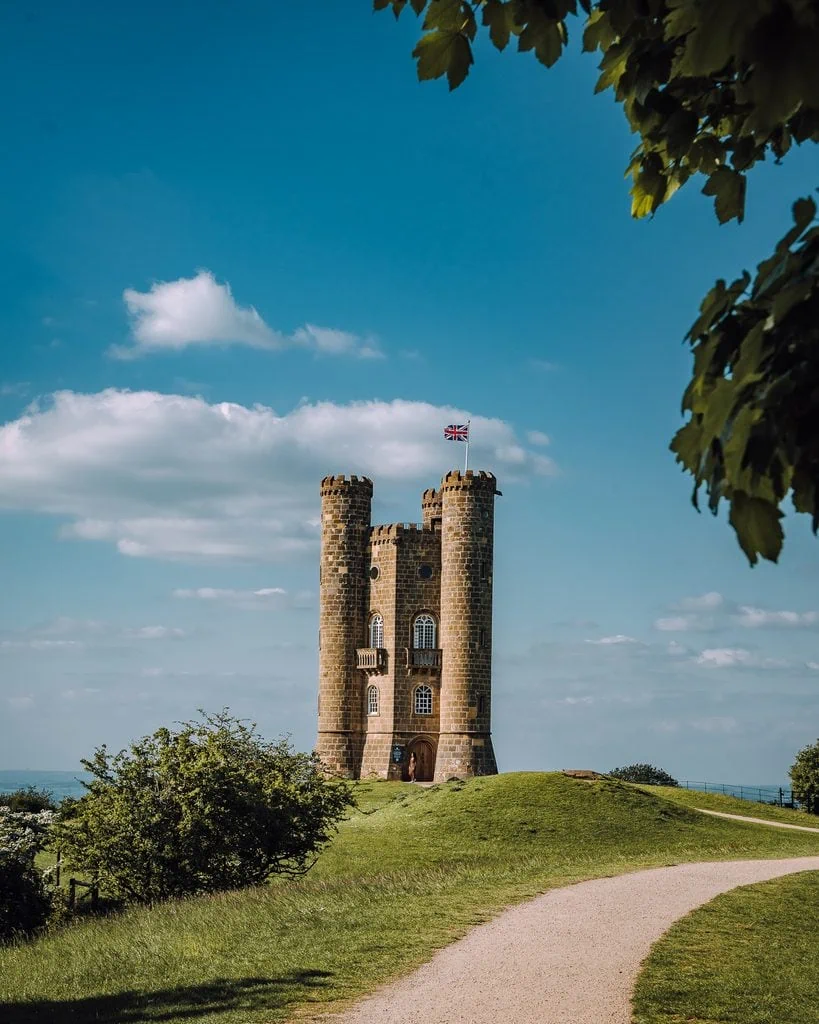
Our Broadway experience centered on Broadway Tower. The 1798 folly stands on the hill above Broadway along the Cotswold Way, surrounded by open countryside and enormous views. You can drive to the tower or follow the approximately four-mile circular walk from the village if you want to experience the High Street and the landscape together.
Best photo spot: Two options. The first is standing near the Broadway Hotel looking down Upper High Street. And the other is the view of Broadway Tower from the surrounding parkland.
How long to spend: Allow two to three hours for the village, or half a day if you combine it with Broadway Tower or walk between the two.
Worth knowing: The village and Broadway Tower have separate car parks, and the tower is a destination of its own with admission, cafés, and seasonal opening hours. Check the official Broadway Tower website before your visit if you want to go inside (from the top, on a clear day, you get panoramic vistas of up to 16 counties!). Broadway is one of the most well-known places in the northern Cotswolds, so its central car parks and High Street can be busy on weekends and in summer.
Pair it with: Snowshill, about ten minutes south, and Chipping Campden, roughly fifteen minutes east.
9. Lacock
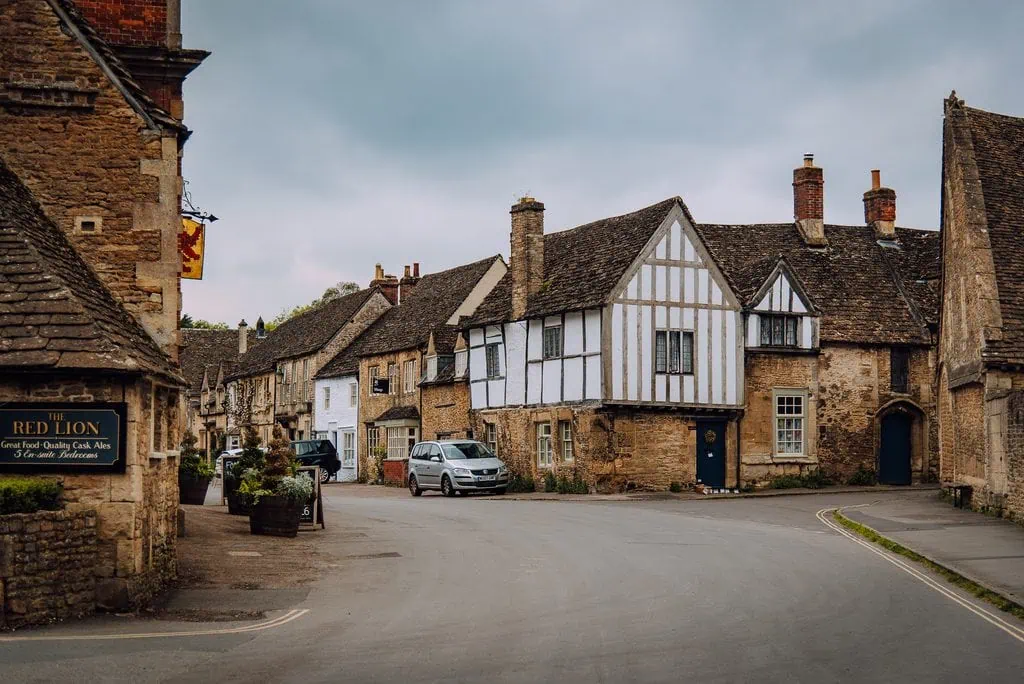
Lacock is where you go if you’ve ever watched a British period drama. It’s in Wiltshire, just outside the Cotswolds National Landscape boundary, so purists may not count it as a true Cotswold village. I still think it belongs on this route. The National Trust cares for the abbey and much of the historic village, whose streets have changed remarkably little in about 200 years. That preserved setting has appeared in productions including Pride and Prejudice, Downton Abbey, Cranford, and the Harry Potter films, where the abbey cloisters became Hogwarts corridors.
What I didn’t expect is that Lacock is also where photography was invented, or close to it! William Henry Fox Talbot lived at Lacock Abbey, and in 1835 he made the earliest surviving photographic negative, a tiny image of one of the Abbey’s latticed windows. The window is still there. As someone who spends a lot of time behind a camera, standing in front of it was a strange, wonderful moment!
Best photo spot: The High Street with its timber-framed and stone cottages, plus the famous oriel window inside the Abbey if you go in. It was raining when we visited, so our outdoor photo options were limited here!
How long to spend: An hour for the village, two with the Abbey and the Fox Talbot Museum.
Worth knowing: The village is free to walk, but the Abbey, cloisters, grounds, and Fox Talbot Museum require admission. Opening hours vary, so check the National Trust’s current Lacock information before you go. Use the signed Hither Way visitor car park rather than parking on the village streets. Lacock is generally around a 30-minute drive from Bath, depending on traffic, so it works well as the last stop before the city.
Pair it with: Castle Combe, roughly twenty to thirty minutes north, and Bath.
Four More Beautiful Cotswold Villages to Consider
I haven’t placed these final four villages in my numbered ranking because we didn’t reach them on this trip. However, they repeatedly came up while I was planning and fill some useful gaps in the route. If you have more than three days, these are the additional places I would consider first—and I’ll update the rankings after I’ve experienced them myself!
Lower Slaughter
Lower Slaughter is the busier and more photographed of the two Slaughters, with the River Eye, small footbridges, honey-colored cottages, and the old mill creating the classic scene. It is roughly a mile from Bourton-on-the-Water, so you can connect the two on foot via the Wardens’ Way instead of making another short drive. I would allow around an hour for the village itself or longer if you walk from Bourton or continue to Upper Slaughter.
Upper Slaughter
Upper Slaughter is the quieter sister village, linked to Lower Slaughter by a roughly one-mile riverside walk. It has fewer obvious attractions, which is part of the appeal: this is a place for cottages, countryside, and a peaceful wander rather than shopping or sightseeing. I would combine the two Slaughters into one stop and allow about two hours for both, more if you stop for lunch or walk the longer route from Bourton.
Stanton
Stanton is a remarkably well-preserved hillside village below the Cotswold escarpment, with a main street that climbs past historic stone cottages and very little commercial development. It is a good choice if you want the atmosphere of a sleepy village rather than another busy High Street. Stanton sits near Broadway and Snowshill and directly on the Cotswold Way, so it makes the most sense as part of a northern route or a countryside walk. Allow around forty-five minutes for a simple wander.
Painswick
Painswick, often called the Queen of the Cotswolds, is the southern option I would add if you have extra time between the central Cotswolds and Bath. Its best-known sight is St Mary’s Churchyard, where tightly clipped yew trees line the paths around the graves. Nearby Painswick Rococo Garden adds a restored eighteenth-century garden and is especially known for its spring snowdrops. Give the town an hour or plan half a day if you add the garden.
Why Are the Cotswold Villages So Pretty?
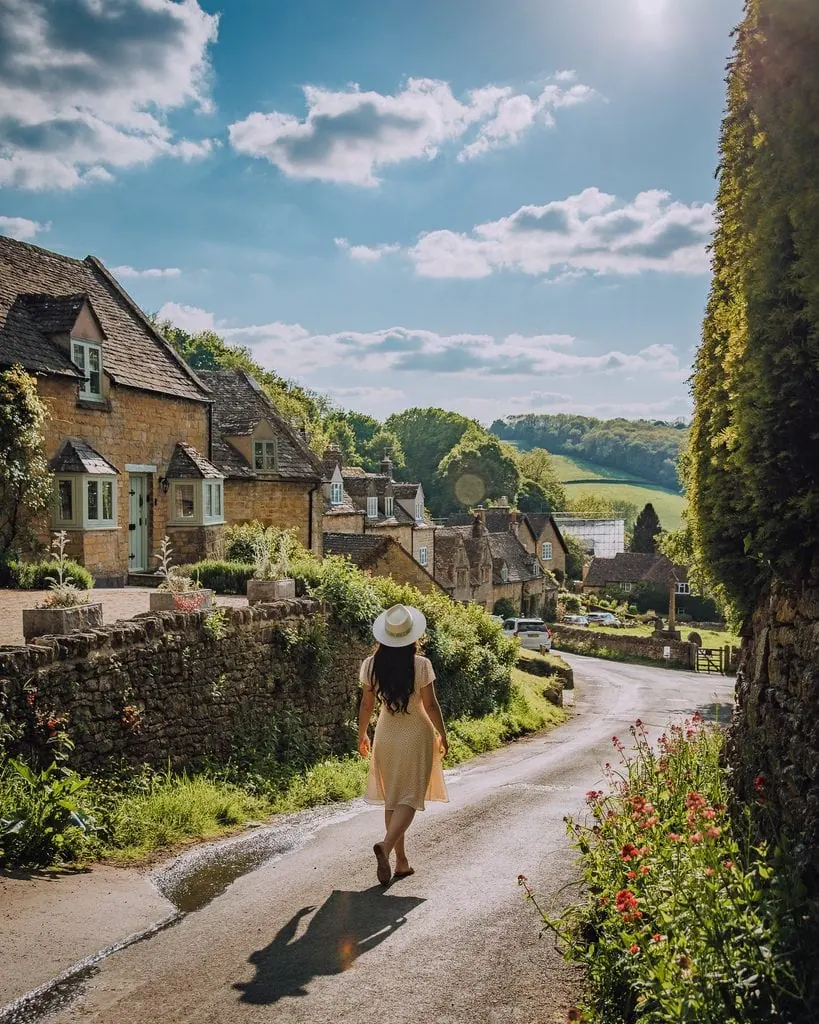
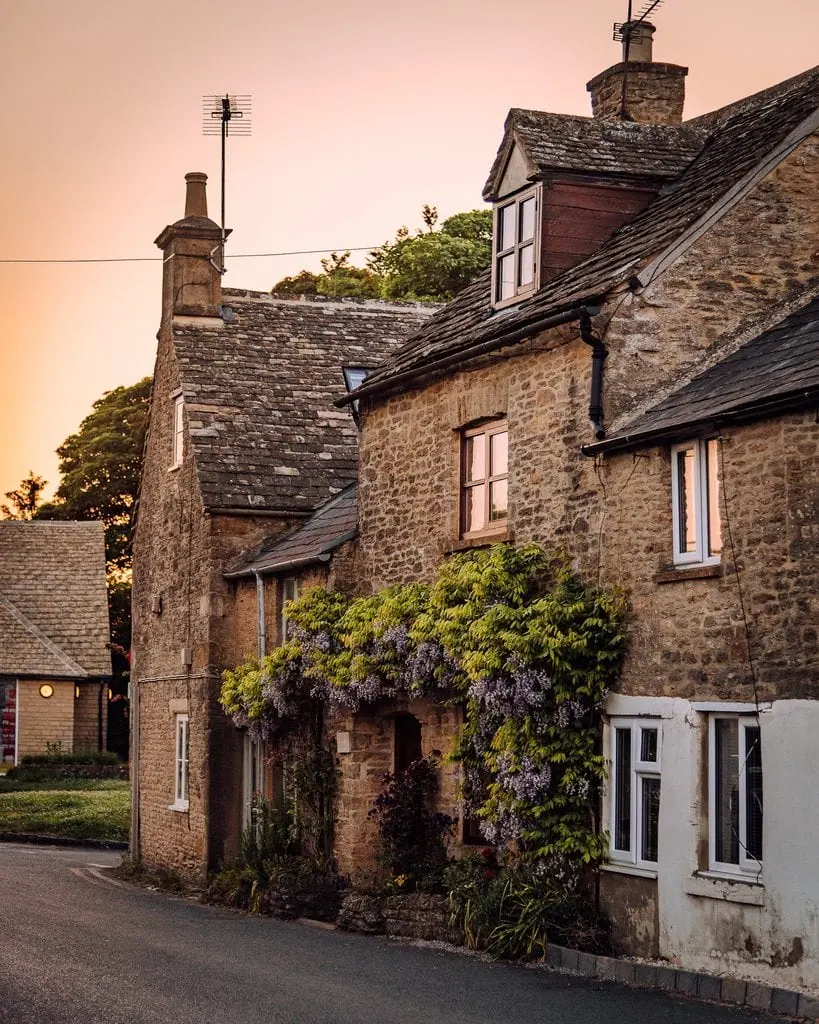
The visual thread tying the best villages together is locally quarried limestone. It weathers into the warm honey color associated with the Cotswolds. The exact tone changes across the region, so some southern buildings look paler than the deep golden stone you see farther north.
Much of the grand architecture came from the medieval wool trade. Wealth from wool paid for merchants’ houses, market halls, manor houses, and the oversized parish churches now known as “wool churches.” Later preservation efforts and the protected status of the Cotswolds National Landscape helped retain the character that first-time visitors come to see.
Cotswold Towns vs. Villages: Which Is Which
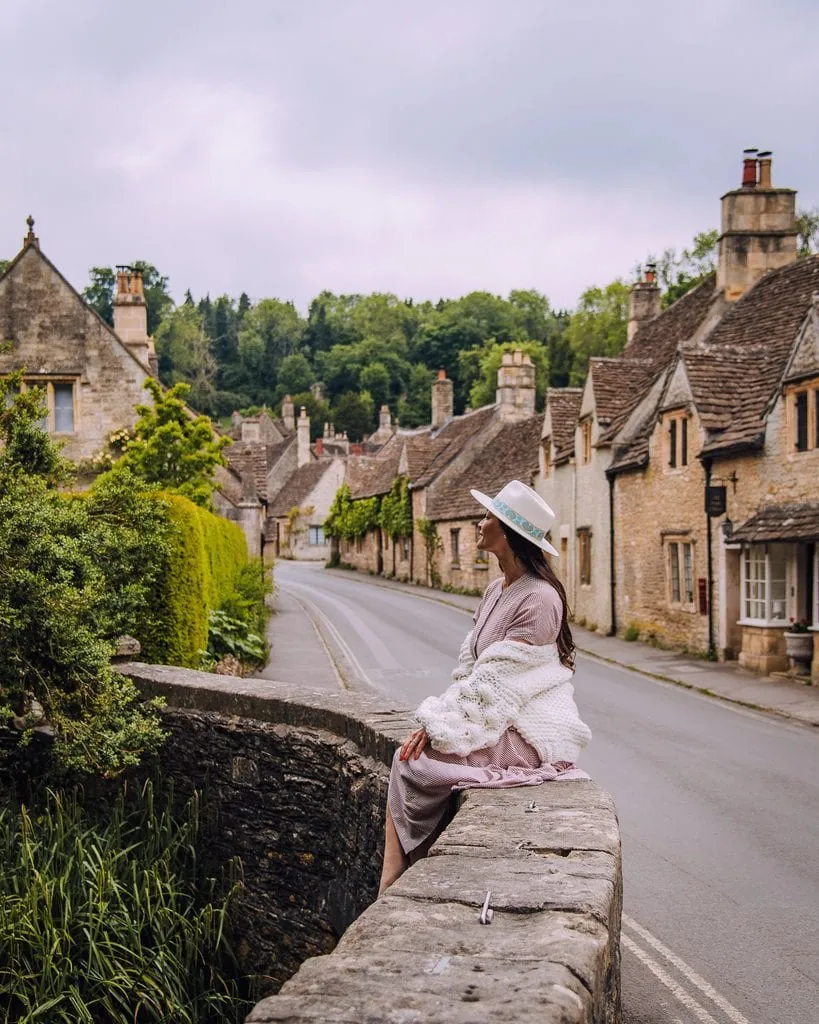
People search for “Cotswold towns” and “Cotswold villages” as if they’re interchangeable, but the distinction matters when you’re planning. Stow-on-the-Wold, Chipping Campden, and Burford are historic market towns. They have a true High Street or market square, more small shops and restaurants, and enough activity for a longer stop. Bourton-on-the-Water and Broadway are villages with many of the amenities of small towns. Castle Combe, Bibury, and Snowshill are much smaller villages where the historic center can be seen in an hour or two. Lacock is also a village, although it sits just outside the official Cotswolds National Landscape.
The other town you’ll see on almost every list is Cirencester, often called the capital of the Cotswolds. We didn’t get to it, so I’m saving a real recommendation for a future trip.
The Best Cotswold Village to Stay In
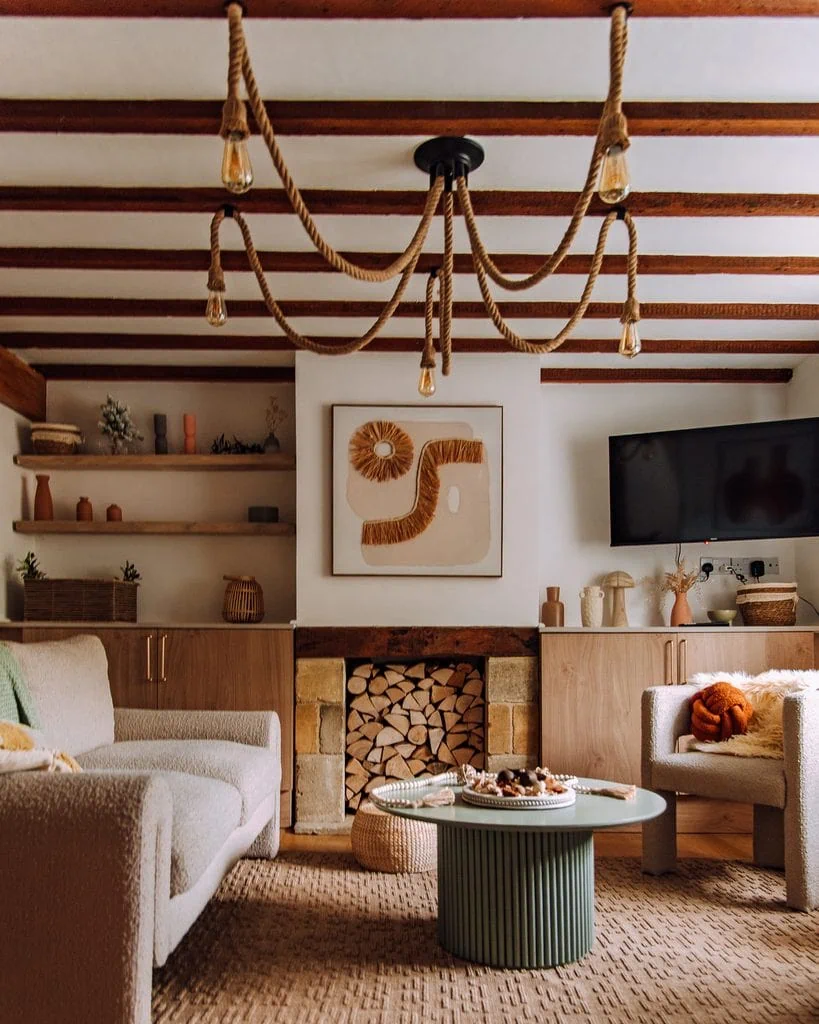
Stay in Stow-on-the-Wold if you want a base for the northern villages, and end in Bath if you’re doing the south. That’s the honest answer from our trip, and it’s what I’d do again.
Stow has the restaurants and the central location. Our cottage there was a two-minute walk from the square, and we could get to Bourton, Snowshill, Broadway, Chipping Campden, and Burford in around half an hour or less, depending on traffic.
Bibury is the romantic choice, and if you want one night that feels like a postcard, The Swan Hotel is the place. We chose a cottage over a hotel with a kid, but the lunch there was lovely and I’d stay if it were just the two of us.
Bath isn’t in the Cotswolds, but it’s roughly thirty minutes from Lacock and about an hour from Bibury, depending on traffic. It’s a real city with a real dinner scene, which made it a great ending point for us. We stayed at The Hiding Space on Trim Street and walked everywhere. If you’d rather sleep in a city at the end of a village day, that’s your move.
What Else to See In and Around the Cotswolds
The villages are the point, but these were some of my favorite places beyond the village centers and are worth working into your route.
Hidcote Manor Garden
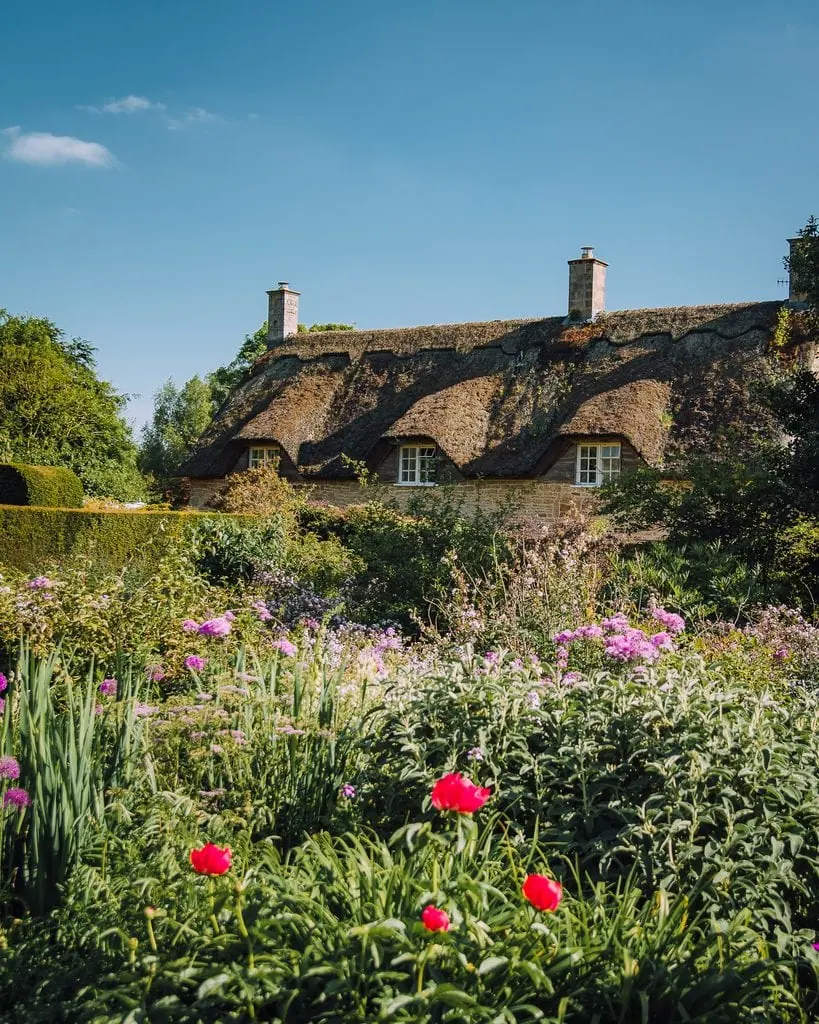
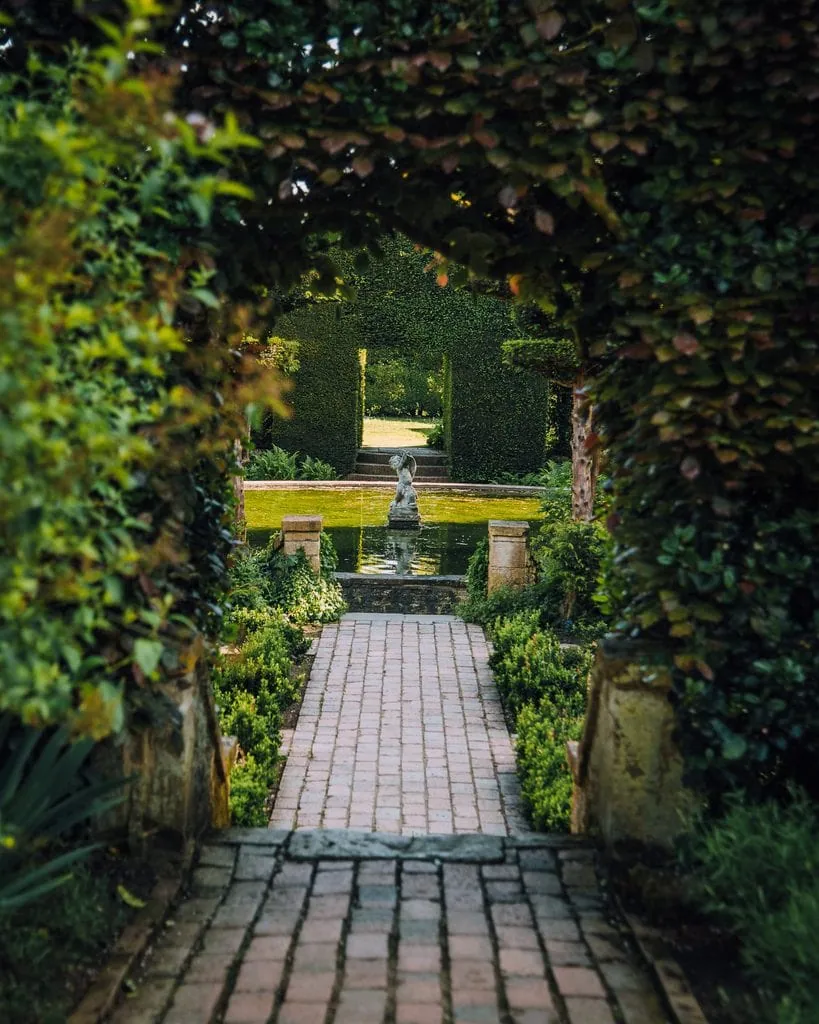
Hidcote Manor Garden is one of the most famous gardens in England, a series of outdoor “rooms” divided by tall hedges, each one a different color scheme, laid out by American-born horticulturist Lawrence Johnston beginning in the early 1900s. It’s a National Trust property about ten minutes from Chipping Campden. In late May it was at its peak: peonies, roses coming in, and thatched cottages at the edge of the borders. We spent most of an afternoon here, and I’d go back for a full day. If you like gardens at all, this is one of the best reasons to visit the north Cotswolds.
Daylesford Organic
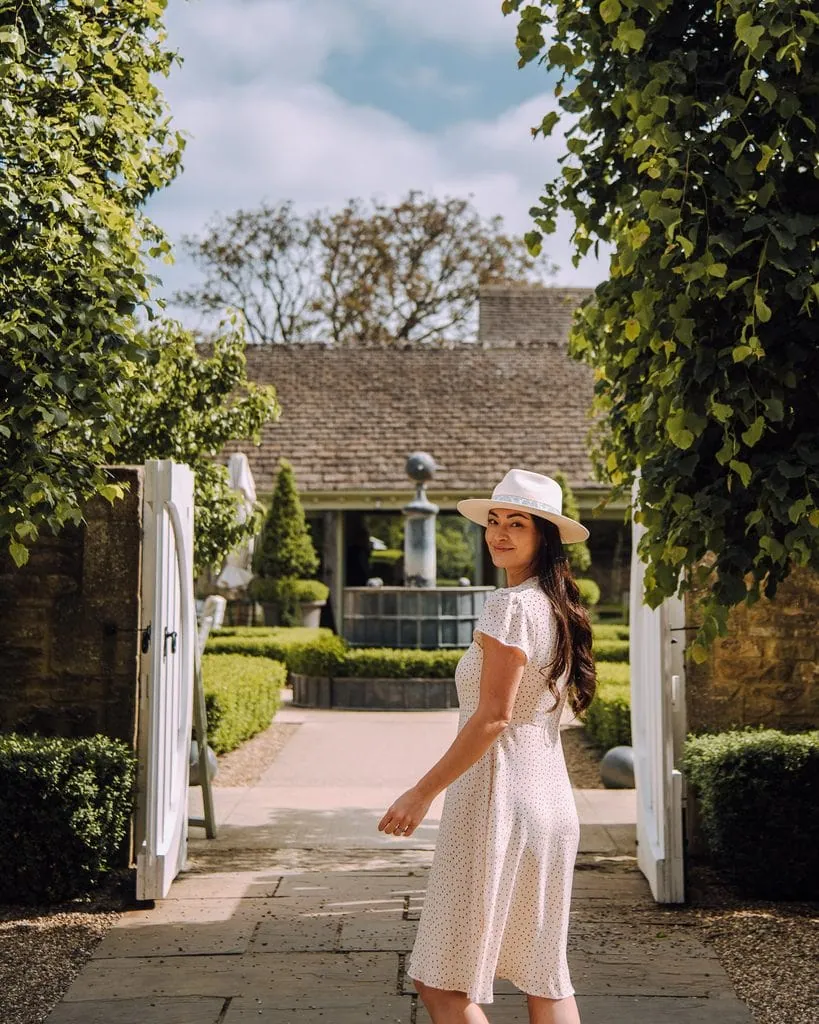
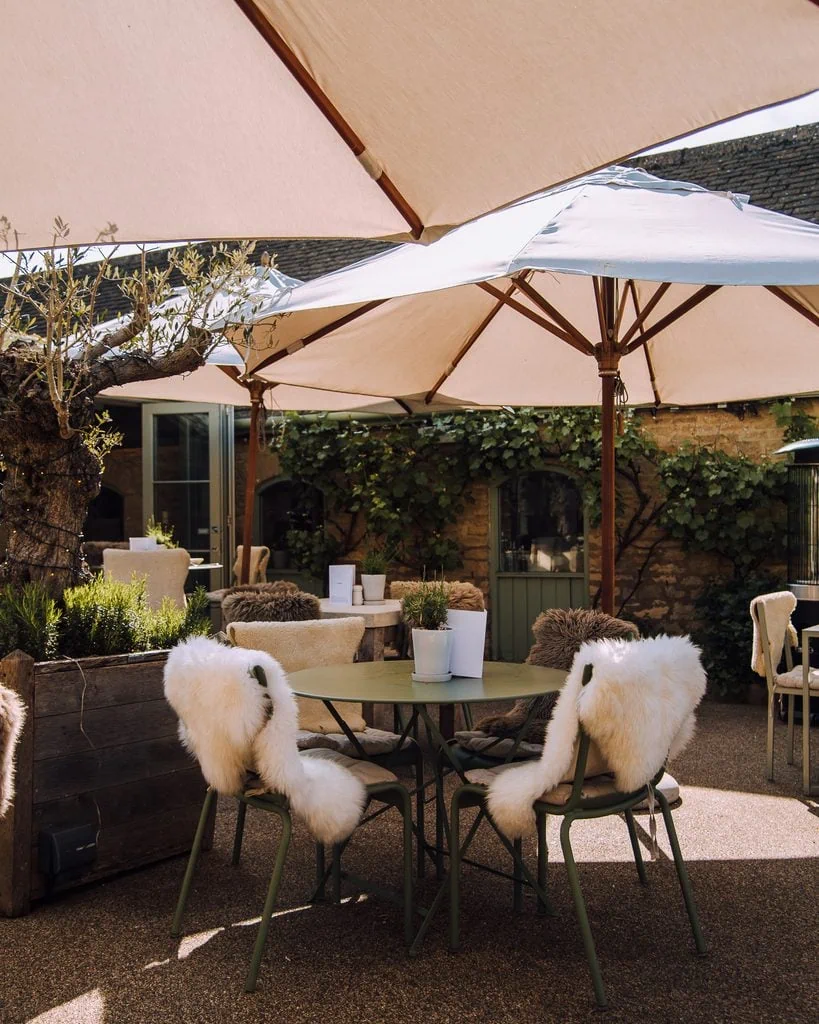
Daylesford Organic, near Kingham, is a polished and beautiful organic farm with a large farm shop, restaurants, home and garden goods, a cookery school, and the neighboring Bamford wellness spa. We stopped for brunch, and the food was incredible. The wisteria covering the stone buildings was in bloom during our May visit. It is expensive and very curated, but it was one of my favorite stops of the trip. Give yourself more time than you think you’ll need if you want to eat and browse rather than simply grab something from the café.
Blenheim Palace
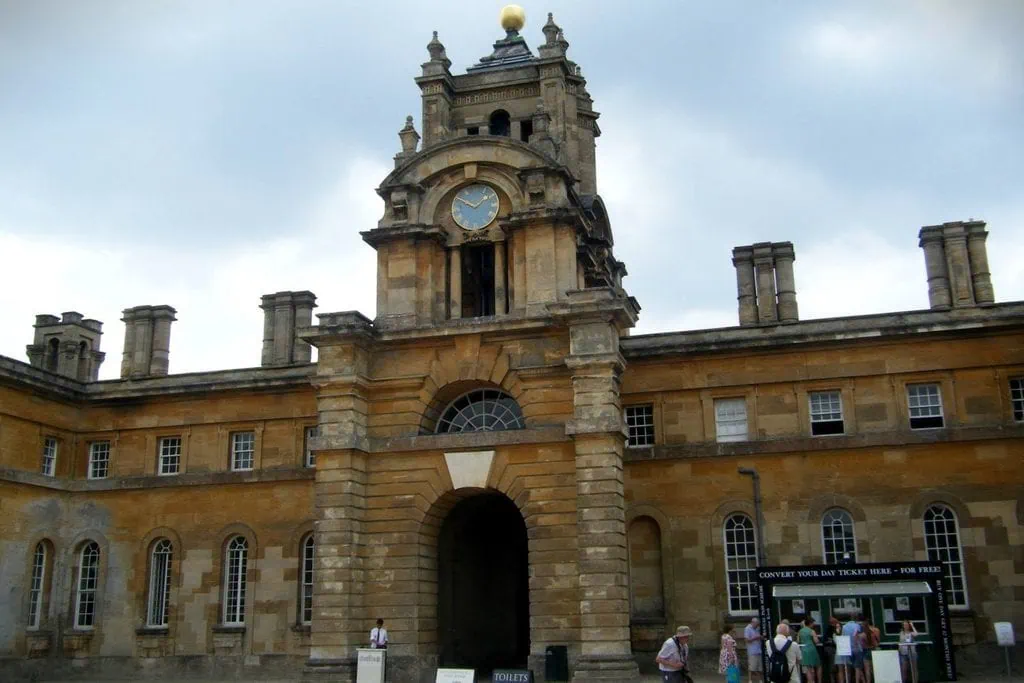
Near Woodstock on the eastern edge of the Cotswolds, Blenheim Palace is one of England’s grandest country houses and a UNESCO World Heritage Site. It is famous as the birthplace of Sir Winston Churchill. Inside, you can tour the elaborate State Rooms and see the room where Churchill was born; outside, the formal gardens open into approximately 2,000 acres of parkland shaped by celebrated landscape designer Capability Brown. I visited Blenheim during college and remember being amazed by both the scale of the palace and the grounds. Give Blenheim at least half a day, although you could easily spend most of a day exploring the palace, exhibitions, gardens, and parkland.
Oxford
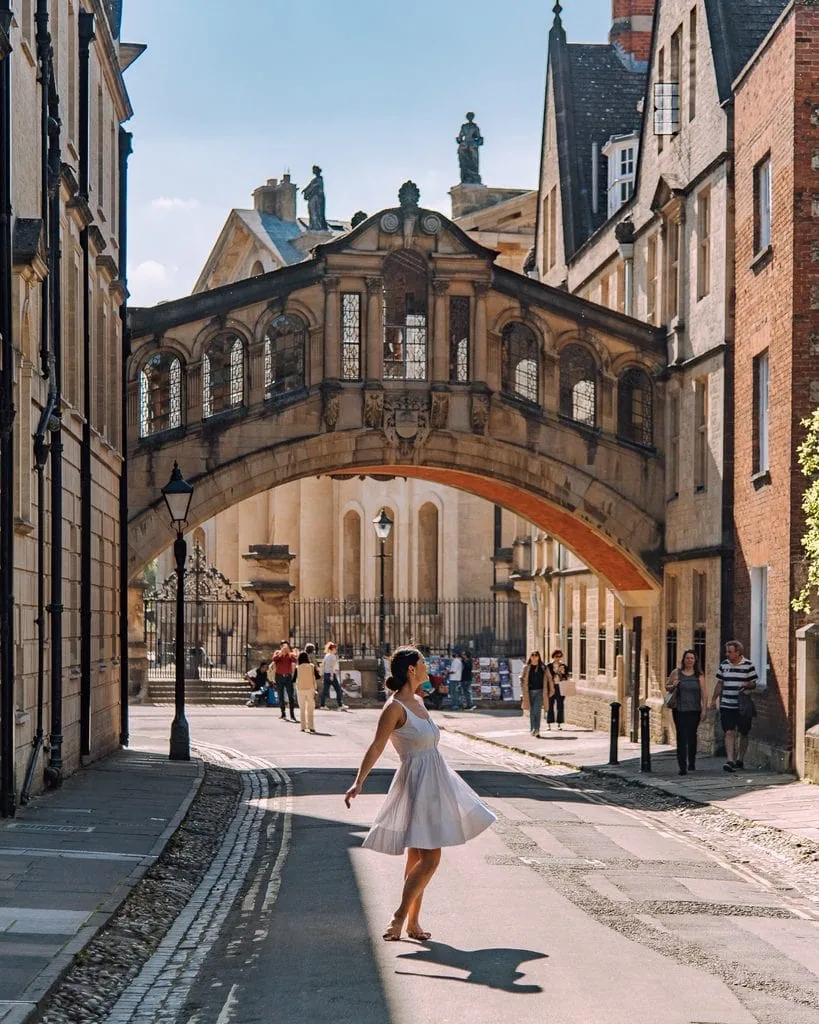
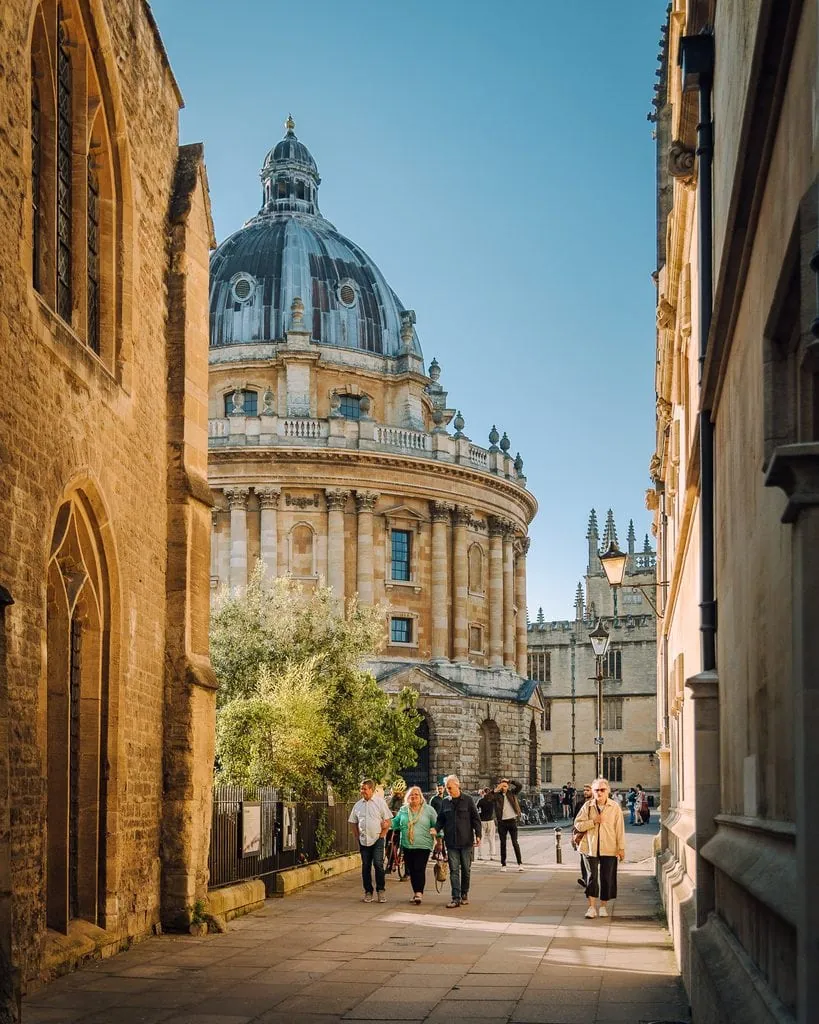
Oxford isn’t part of the Cotswolds, but it is one of the easiest and beautiful cities to combine with a Cotswolds road trip. I spent a college summer studying here, and on our more recent trip we drove from London to Oxford before entering the Cotswolds through Burford. Give Oxford at least a full day to explore its historic center, wander among the university colleges, see the Radcliffe Camera and Bodleian Library, and visit the Covered Market. From Oxford, Burford is roughly thirty minutes west and makes a natural first Cotswold stop. I wouldn’t try to squeeze Oxford and several villages into the same day; stay overnight if you can, or make it the first day of a longer Cotswolds itinerary, like we did.
Bath
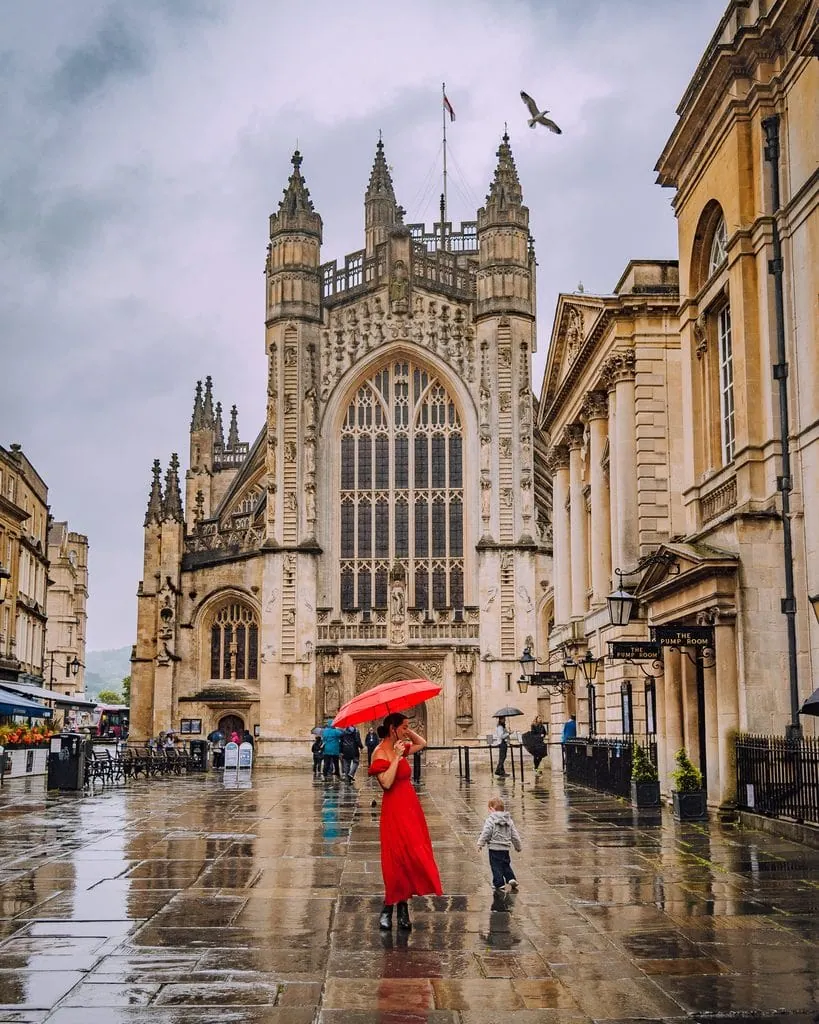
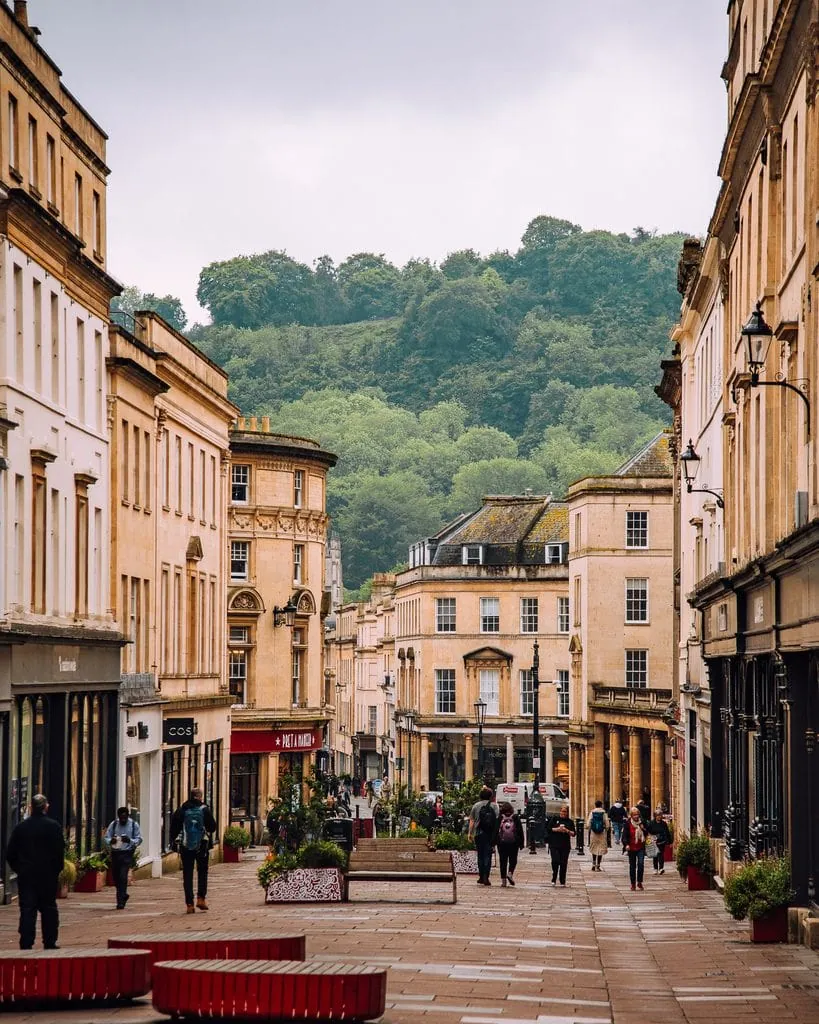
Bath also isn’t part of the Cotswolds, but it is one of the best cities to combine with a visit to the southern Cotswolds. Known for its honey-colored Georgian architecture and remarkably preserved Roman Baths, the city deserves at least a full day of its own. You can visit the Roman Baths, admire Bath Abbey and the Royal Crescent, walk across Pulteney Bridge, and stop for afternoon tea before continuing into the countryside. Castle Combe is roughly thirty minutes away by car, making the two an especially natural pairing, although I would stay overnight in Bath rather than trying to fit both into a rushed half-day.
Stratford-upon-Avon
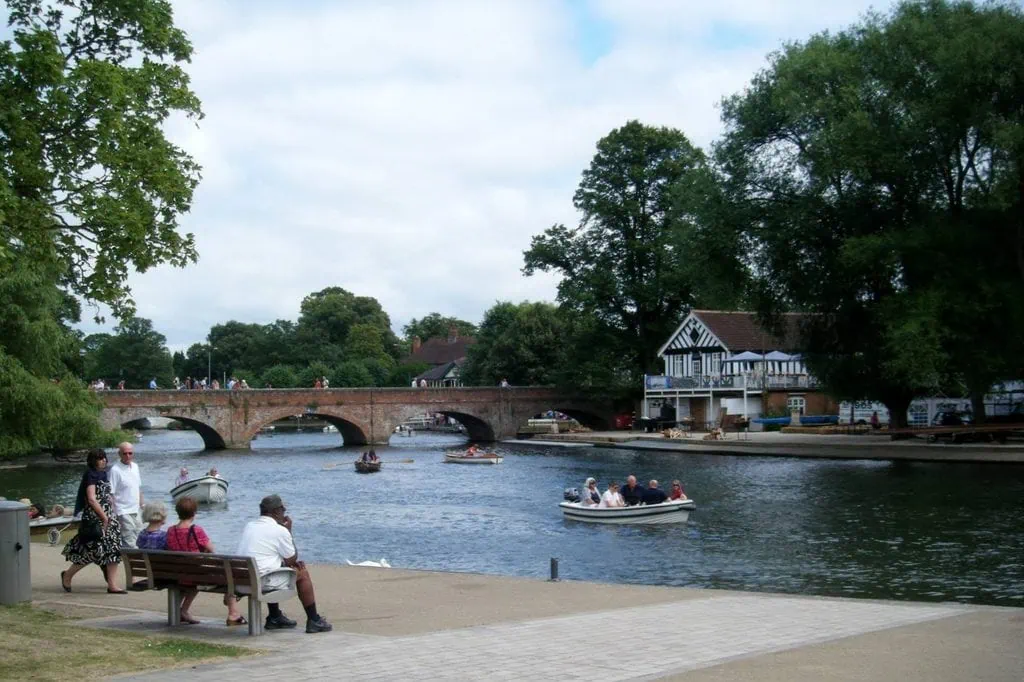
Anne Hathaway’s Cottage and Stratford-upon-Avon make an easy addition to a northern Cotswolds itinerary for Shakespeare lovers. The cottage, located in Shottery just outside Stratford, was the childhood home of Shakespeare’s wife and is surrounded by a traditional cottage garden. Afterward, continue into Shakespeare’s hometown to see his birthplace, walk beside the River Avon, or catch a Royal Shakespeare Company performance. That’s exactly what we did on a day trip from Oxford when I was in college and it was such a memorable day! Stratford isn’t technically inside the Cotswolds National Landscape, but it pairs especially well with Broadway or Chipping Campden.
Berkeley Castle (A Bit Further Out)
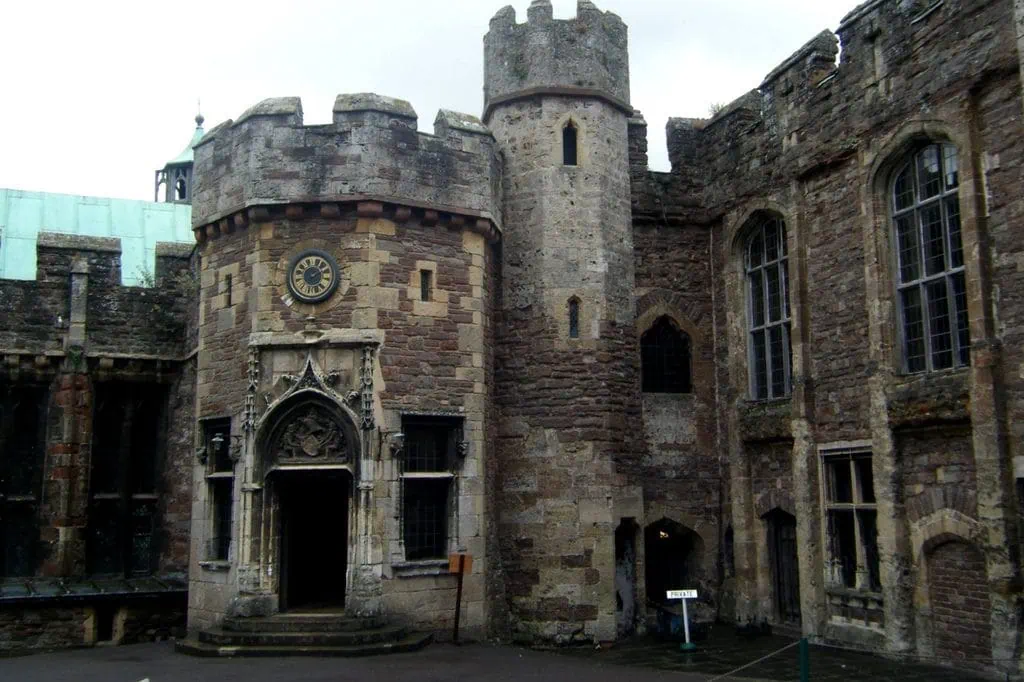
Berkeley Castle, just outside the official Cotswolds National Landscape on its western edge, is one of the most historically significant additions to this itinerary. The medieval fortress has been home to the Berkeley family since 1153 and is famously associated with King Edward II, who was imprisoned and died there in 1327. You can tour the castle’s rooms, towers, dungeon, terraced gardens, and grounds. It is farther from the main village clusters, so I would treat it as a dedicated half-day trip rather than trying to squeeze it between several villages.
Four more places we didn’t get to but that are worth noting:
- Sudeley Castle near Winchcombe, where Katherine Parr, Henry VIII’s last wife, is buried
- Chedworth Roman Villa, where you can see surviving Roman mosaics, bathhouses, and hypocaust heating systems
- Dyrham Park, a seventeenth-century house, formal garden, and extensive parkland near Bath
- Cotswold Wildlife Park near Burford, which is supposed to be great for kids!
How We Did It in Three Days
Day 1: We drove from London to Oxford, then entered the Cotswolds through Burford before sleeping two nights in Stow-on-the-Wold.
Day 2: From Stow, we started the day with a delicious brunch at Daylesford Organic. After that, we did Hidcote Manor, Chipping Campden, Broadway Tower, and Snowshill.
Day 3: On day three, we drove to Bourton-on-the-Water, stopped at the tree tunnel above (navigate to ‘National Trust – Ewe Pen Barn’ to find the street), headed to Bibury, had lunch at The Swan, continued to Castle Combe and Lacock, and ended in Bath.
I’ll add a link here when my complete guide to getting to the Cotswolds from London is live! It’ll have our full route, drive times, train options, and day-tour alternatives.
Most Beautiful Cotswold Villages FAQ
Where is the prettiest village in the Cotswolds?
Castle Combe, in the southern Cotswolds roughly thirty to forty minutes from Bath, is my pick for the prettiest overall village. Bibury’s Arlington Row is the prettiest single street.
What is the most beautiful part of the Cotswolds?
The north around Stow-on-the-Wold has more villages close together and more places to eat and sleep. The south around Bibury and Castle Combe has the two prettiest individual villages. If I had to choose one area for a first trip, I’d pick the north and add Bibury.
Which Cotswold village is best to stay in?
Stow-on-the-Wold is my pick for a convenient base with restaurants, pubs, and antique shops. Choose Bibury if you want one romantic night beside the river.
How many Cotswold villages can you see in a day?
You can comfortably see three Cotswold villages in one day, or four if two are very small. The distances look short, but parking, walking, driving narrow roads, and stopping for meals all take longer than you might expect.
Do you need a car to visit the Cotswold villages?
A car is the easiest way to follow this exact route, but it isn’t the only way to experience the Cotswolds. Trains reach Moreton-in-Marsh and Kingham in the north, while Kemble and Chippenham serve other parts of the region; none of the nine places in my ranking has its own mainline train station. Local buses work for selected towns but require more planning, while a guided day tour is the simplest car-free option for first-time visitors.
What are some hidden gems in the Cotswolds?
The tree-lined avenue at Sherborne, off the A40 near Burford, felt like a hidden gem when we had it to ourselves. Dover’s Hill above Chipping Campden offers a view many visitors drive past, while Snowshill is my favorite quiet alternative to the busier villages. Stanton is also high on my list for a future trip.
What are the Cotswolds famous for?
The Cotswolds are famous for honey-colored limestone villages, rolling farmland, the legacy of the medieval wool trade, manor houses, formal gardens, and long-distance walks such as the Cotswold Way. The local stone is the visual signature: it appears across cottages, churches, walls, and market buildings and glows beautifully in low light.
Prettiest Villages in the Cotswolds: Conclusion
If you’re choosing purely on beauty, Castle Combe is still my number-one Cotswold village, while Bibury has the single prettiest street. For a more complete first trip, I would base myself in Stow-on-the-Wold and use it to explore Bourton-on-the-Water, Chipping Campden, Broadway, Snowshill, and the other northern villages before heading south to Bibury and Castle Combe.
The best Cotswolds itinerary isn’t the one that checks off the most villages. It’s the one that gives you enough time to walk a High Street, stop for lunch, follow an unexpected country road, and still photograph the last village in soft evening light. Start with the nine places I ranked from our trip, then use Lower Slaughter, Upper Slaughter, Stanton, and Painswick to shape the route that works best for you.
Happy exploring!
Jasmine
PS. Exploring London, too? Check out my article on the 50 most Instagrammable places in London!